What OVHcloud is building across AI, datacentres and private cloud
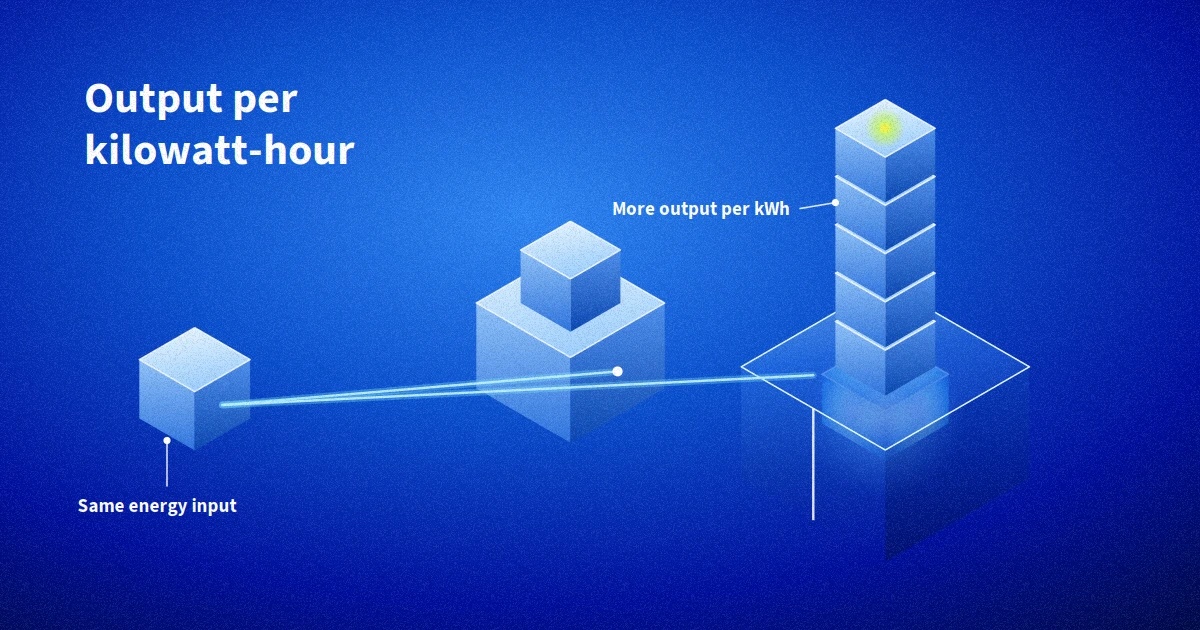
Three November 2026 articles present OVHcloud’s strategy as control of a broad technology chain, spanning datacentres, servers, cooling, cloud services, AI models and customer-operated infrastructure. OVHcloud says its AI portfolio now includes more than 40 open-source models through AI Endpoints, an AI Lab for training and fine-tuning large language models, and planned beta access to the encrypted, agentic-AI-enabled OVHai Workspace. It also reports acquisitions in encryption, specialised language models and voice AI. At the infrastructure level, the provider argues that output-based measures such as tokens per joule should complement energy-consumption figures. It reports a group-average PUE of approximately 1.24 and WUE of 0.34 litres per kWh for FY2025, alongside lower site figures for Limburg in Germany and Erith in the UK. OVHcloud further claims that its newer cooling architecture can reduce cooling-infrastructure power consumption by up to 50% and cooling-water use by up to 30% compared with its original design. Separately, it says Scality RING has become the first third-party solution certified for the defined compatibility scope of OPCP Core, providing documented deployment of S3-compatible object storage in customer datacentres, including disconnected environments.
Strategic interpretation: sovereignty is becoming a full-stack proposition
Taken together, the articles indicate that OVHcloud is expanding sovereignty beyond European hosting and data location. Its direction is toward a vertically coordinated stack: provider-operated European infrastructure, in-house server and cooling engineering, accessible open-source models, development of its own models, native encryption and an on-premises platform that can accommodate certified partner software. This is particularly relevant in Western Europe, where organisations in government, industry, critical infrastructure and other sensitive sectors may need to reconcile AI adoption with operational control, location requirements and sustainability reporting. The Scality integration also suggests that OVHcloud does not intend to supply every layer itself; it is creating a controlled partner route for specialised technologies while retaining a documented infrastructure baseline. Meanwhile, the emphasis on tokens, samples and computing output per unit of energy connects AI economics with environmental efficiency. The emerging trend is therefore not simply sovereign cloud or sovereign AI, but an attempt to make sovereignty, hybrid deployment and resource efficiency mutually reinforcing purchasing arguments.
Risks, limitations and questions that remain open
The evidence does not yet establish that all parts of this strategy deliver equivalent maturity or value. Several AI elements are announcements, previews or beta-stage initiatives, and the supplied material provides no independent model-quality benchmarks, production service levels, workload-level energy results or detailed cost comparisons. OVHcloud’s PUE, WUE and cooling-reduction figures are provider-reported; buyers should check measurement boundaries, reporting periods and whether site-specific results apply to their intended service. Comparisons also use benchmarks from different countries and years, while tokens per joule can vary materially by model, hardware, precision, batching and workload. The Scality certification is explicitly limited to a documented OPCP Core configuration: it is not a regulatory qualification or certification of the entire platform. Scality licences remain a separate commercial matter, Cloud Store integration is not currently available, and air-gapped operations still require defined deployment, update and support processes. These constraints do not invalidate OVHcloud’s direction, but they make technical validation and contract-level scrutiny essential.
Decision guide and sources: OVHcloud’s sovereign AI direction, its datacentre-efficiency case and the Scality OPCP certification
For Western European IT decision-makers, OVHcloud merits consideration where European data placement, on-premises or disconnected operation, open-source AI access and infrastructure efficiency are important selection criteria. Evaluation should proceed at workload level rather than accepting the full-stack narrative as a single assurance. Buyers should request applicable PUE and WUE data, methodology and Scope 3 reporting inputs; benchmark training or inference performance and energy use on representative models; verify encryption, jurisdiction and administrative-access arrangements; and test the precise OPCP and Scality topology, recovery process, update path and support ownership. Roadmaps and previews should be separated from generally available services in procurement scoring. The provider’s own supporting accounts are OVHcloud AI Summit 2026: sovereign AI, from infrastructure to models, Output per kilowatt-hour: the new benchmark for sustainable datacentres and Scality RING becomes the first partner solution certified for OPCP Core. Collectively, they show a coherent regional strategy, but procurement decisions should depend on independently tested performance, applicable site data and enforceable contractual commitments.
