Three initiatives connect GPU flexibility, regional control and network protection
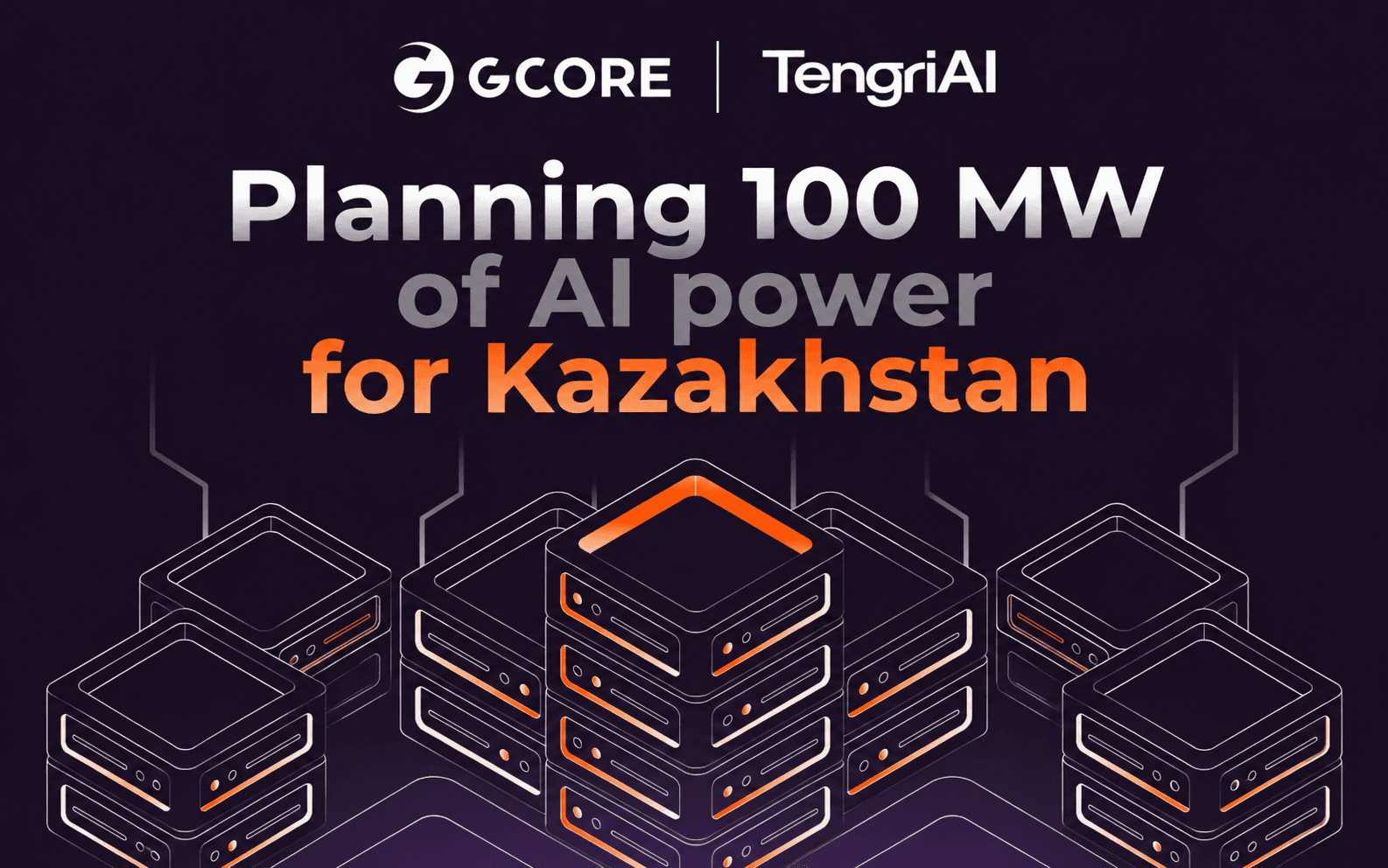
Gcore’s selected 2026 announcements describe a strategy spanning AI compute and infrastructure resilience. The Luxembourg-headquartered provider says it launched GPU Virtual Machines on NVIDIA Hopper infrastructure first in its Sines-3 sovereign AI region in Portugal. According to Gcore, customers can select one, two, four or eight GPUs, stop GPU billing when an instance is powered off, and retain volumes, IP addresses and configuration. In Kazakhstan, Gcore and TengriAI signed a memorandum of understanding to explore a GPU data centre targeting up to 100 MW, delivered in phases between 2027 and 2029; TengriAI would handle land, power, permits and construction, while Gcore would supply its AI cloud stack, operations and customer demand. A separate Armenian deployment focused on operational resilience: Gcore says Ucom activated its network-layer DDoS protection within one day for public broadcast infrastructure during the country’s parliamentary elections. Ucom’s infrastructure reportedly remained available, although the announcement also states that no DDoS-related disruption was observed.
The emerging model is portable sovereign infrastructure, not compute alone
Taken together, the announcements suggest that Gcore wants to compete through an integrated combination of GPU infrastructure, cloud software, networking, security and local operating models. Portugal represents the Western European anchor: sovereign regional capacity paired with virtualised, interruptible consumption for experiments and variable AI workloads. Kazakhstan extends that proposition beyond Gcore-operated regions by proposing a platform that a local partner could meter, bill and resell, while supporting isolated workloads that remain inside the facility. Armenia demonstrates the adjacent operational layer, where distributed network protection can be attached quickly to nationally visible services. The broader trend is a shift from selling undifferentiated cloud capacity toward supplying locally controlled AI and digital infrastructure with flexible economics and embedded resilience. For Western European organisations, this direction is relevant because it aligns AI deployment choices with jurisdiction, workload placement, operational control and security rather than treating sovereignty as a data-location checkbox.
Commercial promises still require technical and contractual validation
The evidence has important limits. The Kazakhstan initiative is an exploratory memorandum rather than a completed facility or committed capacity, and the release supplies no final investment decision, hardware configuration, delivery milestones beyond the proposed phase window, pricing or customer commitments. The GPU VM announcement provides configuration and billing claims but no independent performance benchmarks, availability figures, capacity levels, detailed prices or comparisons with alternative services. Buyers should also verify what “sovereign” means contractually across ownership, administration, support access, encryption-key control, telemetry and legal jurisdiction. The Armenian case demonstrates rapid provisioning and service continuity during a protected period, but because Gcore says no DDoS-related disruption was observed, it does not establish how the deployment would have performed against a material attack. Procurement teams should therefore test APIs, workload portability, quota guarantees, incident procedures, data-egress conditions, support responsibilities and recovery arrangements before treating the three announcements as proof of production outcomes.
Decision guide and sources: GPU VMs in Portugal, Kazakhstan AI data-centre plan and Armenian broadcast protection
For IT decision-makers in Western Europe, Gcore merits consideration where the requirement combines European AI workload placement, burstable GPU access and network-security services, or where an organisation wants infrastructure that could be deployed through regional partners. Its differentiating proposition, as presented by the provider, is not merely access to NVIDIA hardware but the ability to combine compute, an AI cloud stack, networking and security under different operating models. That proposition should be evaluated workload by workload: compare the flexibility described in Gcore’s GPU VM launch announcement, distinguish the ambition from the delivery status in the Gcore–TengriAI memorandum announcement, and treat the Ucom election-broadcast deployment as an operational case rather than an attack-performance benchmark. The independent conclusion is that Gcore is positioning Western Europe as a base for a wider sovereign-infrastructure strategy, but buyers still need contractual sovereignty definitions, verified service levels, cost modelling and technical testing before making it a strategic platform choice.
