A European stack spanning inference, isolation and security oversight
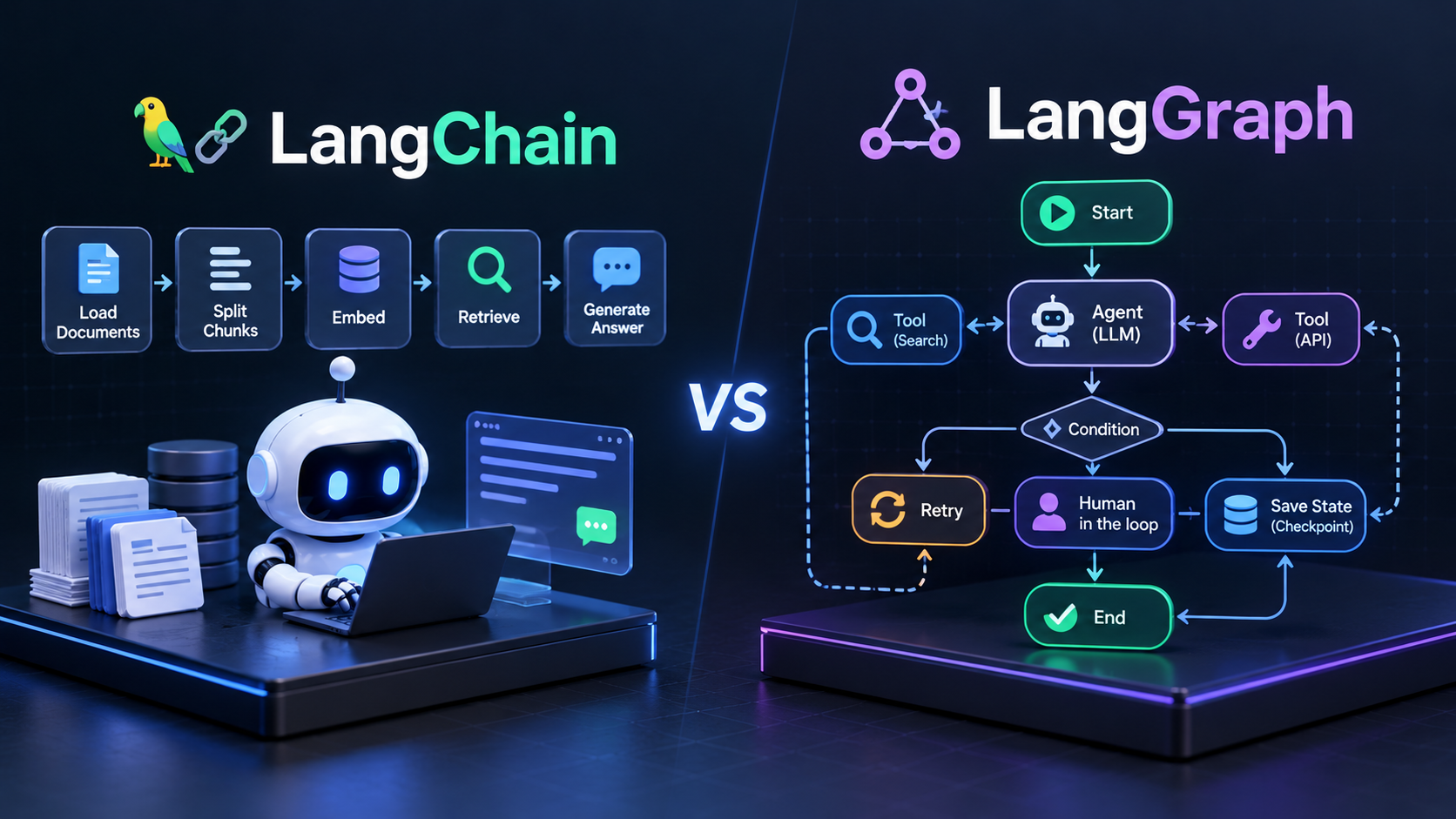
Three Exoscale articles published in October and November 2026 describe a cloud strategy that extends from AI development into runtime containment and security monitoring. Exoscale presents LangChain as suitable for fixed LLM pipelines and LangGraph as an orchestration layer for stateful workflows, while arguing that framework selection should remain separate from the location of model inference. The provider says its Concrete AI service supplies OpenAI-compatible inference on dedicated NVIDIA GPUs in EU and Swiss zones; Dedicated Inference is described as available, whereas On-demand Inference remains in private preview. A second article sets out a defense-in-depth model for AI agents based on process controls, container or runtime isolation, network restrictions, permissions, observability and resettable state. It maps that model to Exoscale Kubernetes, storage and inference services. The third article announces a partnership with Swiss security company Panop. According to the companies, Panop now runs on Exoscale infrastructure, is available through its marketplace and provides the first native cloud security posture management support for Exoscale environments, including configuration checks, drift detection and exposure prioritization. These availability and capability statements are provider and partner claims rather than independently tested findings.
Sovereignty is shifting from data location to operational control
Taken together, the articles indicate that Exoscale wants to make sovereignty an architectural property of the full AI and cloud lifecycle rather than a narrow promise about storage location. Its emerging proposition combines a replaceable, OpenAI-compatible model endpoint with European execution, restricted agent egress, isolated workloads and locally processed security intelligence. That direction is relevant because agentic systems introduce infrastructure concerns that ordinary chat interfaces do not: generated code, dynamic tool selection, persistent state and access to real APIs enlarge the potential blast radius. Exoscale’s emphasis on explicit graphs, human approval steps, least privilege and sandboxing suggests a move toward production-oriented AI operations rather than model access alone. The Panop partnership broadens the same logic to operational security: if configuration and exposure findings reveal an organization’s weaknesses, their processing location can matter alongside the residency of application data. For Western European organizations, this creates a potentially coherent alternative to assembling inference, orchestration infrastructure and posture monitoring from services governed across several jurisdictions. It also shows Exoscale using compatibility and partnerships, rather than a wholly proprietary AI stack, as the route to a broader platform offering.
A coherent direction still requires technical and contractual validation
The proposed architecture should not be confused with a complete compliance or security outcome. Exoscale itself acknowledges that EU deployment and network restrictions do not establish GDPR compliance or eliminate every cross-border transfer issue. OpenAI API compatibility can simplify endpoint changes, but the article also notes that model names, credentials, context windows and provider-specific behavior still require checking; compatibility therefore does not guarantee functional parity. Agent sandboxes reduce consequences rather than making models reliable, and approved endpoints or over-privileged tools can still be misused. Runtime choices introduce further trade-offs among isolation strength, startup time, compatibility, performance and operational complexity. The supplied articles contain no independent performance tests, service-level comparisons, pricing scenarios, security certifications or customer evidence for Concrete AI, sandboxed agent deployments or Panop’s Exoscale integration. On-demand Inference is explicitly not yet generally available. Buyers should consequently validate model coverage, GPU capacity, logging, identity controls, tenant separation, recovery processes, egress enforcement, data-location commitments and incident responsibilities. They should also assess whether Panop’s native checks cover the Exoscale services and policy frameworks relevant to their own environment rather than treating marketplace availability as proof of comprehensive coverage.
Decision guide and sources: AI workflow and inference guidance, agent sandboxing model and Panop partnership announcement
For IT decision-makers in Western Europe, Exoscale’s direction is most compelling where data residency, jurisdictional control and operational inspectability are explicit procurement requirements. The practical evaluation should treat workflow orchestration, inference location, agent containment and security monitoring as separate control planes, even if Exoscale aims to host them within one European environment. A proof of concept should test a representative LangChain or LangGraph workload against the intended model endpoint, verify all application and telemetry flows, enforce deny-by-default egress, exercise human approval and rollback paths, and confirm that exposure findings remain in the contracted location. Teams can use Exoscale’s comparison of LangChain and LangGraph to frame application design, its agent sandboxing analysis to define containment requirements, and the Panop and Exoscale announcement to examine the proposed security layer. CloudInsights’ assessment is that the recurring theme is credible strategic alignment: Exoscale is positioning sovereign AI as a controlled operating environment, not merely a European model endpoint. Whether that becomes a differentiated production platform depends on demonstrated service maturity, enforceable contractual assurances and evidence that its integrated controls work under real workloads.
