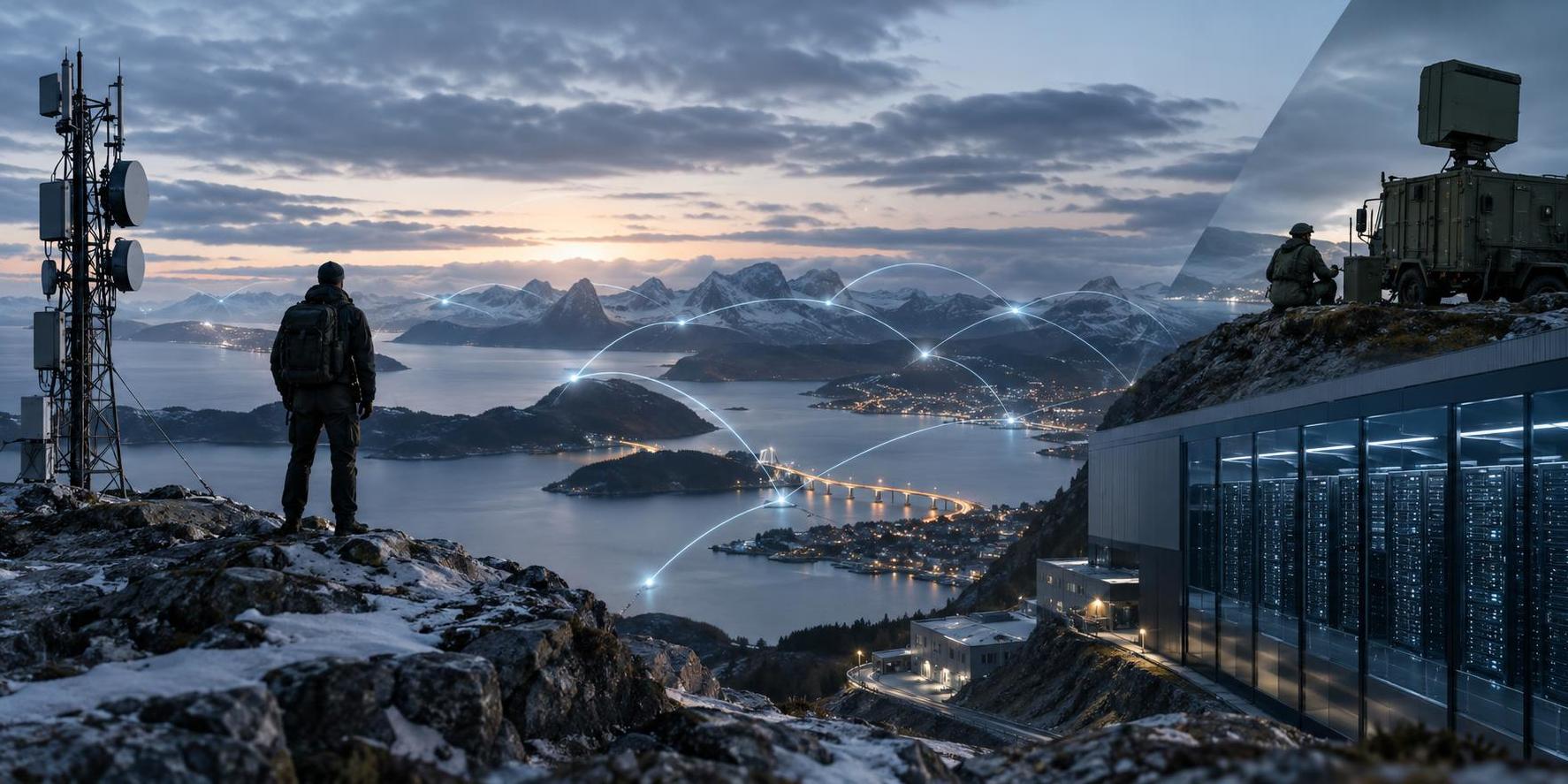
Security, ownership and defence communications converge
Three Telenor announcements point to an expanding focus on infrastructure control and operational resilience across the Nordics. Telenor Sweden says it has acquired a controlling stake in Bahnhof and launched a mandatory cash offer of SEK 62 per remaining share, although the announcement provides no integration plan or cloud-specific rationale. Separately, a Telenor-commissioned survey of 2,427 business leaders in Denmark, Finland, Norway and Sweden found that half considered their organisations well prepared to maintain critical operations during a serious digital disruption. Only 12% reported being fully prepared for AI-enabled cyber threats, while 36% expected to increase investment in cybersecurity and digital resilience. Telenor also reports that its subsidiary KNL secured a framework agreement through which Denmark’s defence procurement organisation can buy secure high-frequency communications. According to KNL, its encrypted system operates independently of satellite communications and satellite navigation infrastructure and is designed to remain stable under jamming and electromagnetic interference.
A broader role in Nordic digital sovereignty
Taken together, the announcements suggest that Telenor wants to be viewed not merely as a connectivity supplier, but as a participant in the Nordic region’s wider resilience architecture. The Bahnhof transaction signals a willingness to increase control over Swedish digital infrastructure, while the security report frames continuity, sovereignty and cross-border coordination as shared Nordic concerns. KNL adds a specialised defence dimension built around communications that can function when conventional infrastructure is unavailable. AI appears here primarily as a force accelerating fraud and cyberattacks, rather than as evidence of a defined AI Factory or cloud platform strategy. The emerging trend is therefore less about public-cloud expansion and more about sovereign infrastructure, secure communications and continuity across civil and defence environments. For Norwegian and other Nordic organisations, this direction is regionally relevant because it connects national infrastructure decisions with shared suppliers, dependencies and crisis planning.
Commercial frameworks are not the same as proven outcomes
The evidence has important limits. Telenor’s preparedness figures come from its own report and reflect respondents’ assessments rather than independently tested continuity capabilities. The supplied material does not disclose sampling details beyond the number and location of respondents, and it does not demonstrate that Telenor services improve resilience. KNL’s technical characteristics are provider claims, while eligibility under procurement frameworks does not guarantee future orders. Its announced Finnish and Swedish framework orders total approximately EUR 23.5 million, but the much larger ceiling cited for the UK framework applies to the overall multi-supplier arrangement, not to revenue secured by KNL. The Bahnhof announcement also omits the acquired ownership percentage, expected synergies, integration risks and any relationship to cloud or AI infrastructure. Buyers should consequently test architecture, failover independence, data governance, interoperability, support arrangements and contractual recovery commitments rather than treating regional ownership or defence-sector participation as sufficient assurance.
Nordic buyer conclusion — Bahnhof acquisition, Nordic security findings and KNL defence agreement
For IT decision-makers in Norway and the wider Nordic region, the practical signal is that Telenor is aligning investment and messaging around regional control, crisis readiness and communications that can survive infrastructure disruption. That could make the provider relevant to resilience and sovereignty discussions, but the selected evidence does not yet establish a comprehensive cloud or AI Factory proposition. Procurement teams should evaluate each layer separately: the strategic implications and integration plan behind the Telenor Sweden acquisition of Bahnhof, the methodology and actionable recommendations behind Telenor’s Nordic preparedness survey, and the operational evidence supporting KNL’s secure HF communications framework. The strongest independent conclusion is that Telenor’s Nordic direction currently centres on resilient and sovereign connectivity; buyers should require clearer cloud architecture, service-level and AI-governance evidence before extending that conclusion to a broader cloud strategy.
