Licensing, cloud management and security converge
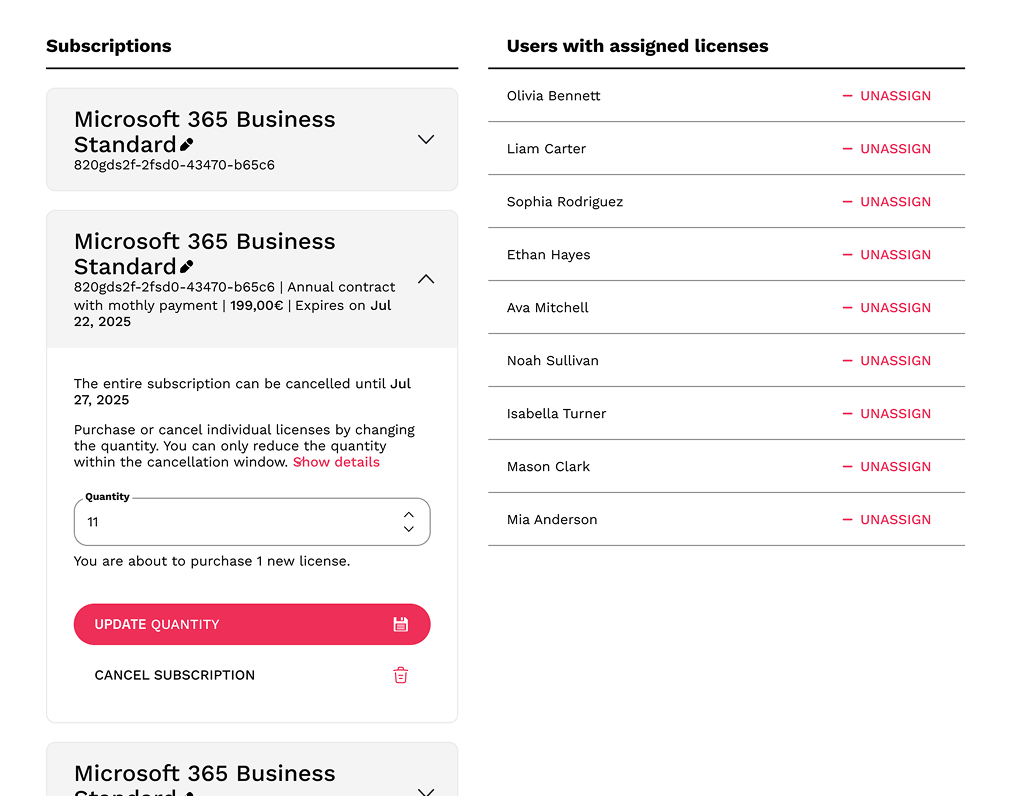
Span presents span.zone as a self-service platform through which businesses can purchase, manage and monitor Microsoft and Google licenses alongside Span’s own services. According to the provider, customers can view costs and service status through dashboards, adjust resources and licenses, and obtain support covering cloud management, cybersecurity and business solutions. The page also promotes Microsoft 365 Copilot, security education for small and medium-sized enterprises, and guidance on business applications. Taken together, these offerings show Span combining software procurement with ongoing administration, optimization and specialist assistance rather than treating cloud licensing as a stand-alone transaction.
A hybrid of digital self-service and managed expertise
The emerging strategic direction is a hybrid operating model: routine purchasing and license changes move into a digital interface, while Span retains a role in cloud operations, security and education. Microsoft occupies the most prominent position in the material, including Microsoft 365 subscriptions and Copilot, although Google Workspace is also offered. This suggests that Span’s AI strategy is currently tied chiefly to embedding third-party productivity AI into existing workplace environments, rather than presenting a proprietary AI platform. For organizations in Croatia and the wider Balkan region, the approach could be relevant where internal IT teams want centralized control over subscriptions but still need external expertise for governance, security and cloud management.
Control claims require operational scrutiny
The supplied material is commercial provider content and does not independently demonstrate customer outcomes. Span says its platform offers advanced analytics, cost visibility, real-time optimization and control over resources, but it provides no figures for savings, service performance, adoption or support responsiveness. It also does not explain data residency, contractual service levels, integration depth, identity controls, regulatory arrangements or the geographic availability of individual services. Buyers should therefore test whether the dashboard covers their complete multicloud estate or primarily the products purchased through Span. Copilot adoption also introduces questions about information governance, permissions, training and licensing costs that cannot be resolved from the provider’s promotional offer alone.
Decision guidance from the Span Zone service overview
For Balkan IT decision-makers, Span’s proposition is most compelling as a potential bridge between license administration and managed cloud operations. Organizations should evaluate it against concrete requirements: support in relevant languages and jurisdictions, billing transparency, administrator access, exportability of operational data, incident handling, security responsibilities and the ability to manage existing contracts. A limited pilot could establish whether self-service changes genuinely reduce administrative work and whether Span’s specialists add value beyond standard vendor portals. The provider’s priorities and stated functionality can be reviewed in the Span Zone platform and services overview; procurement decisions should still depend on contractual evidence, security documentation and direct validation of regional service delivery.
