Capital secured for hyperscale expansion
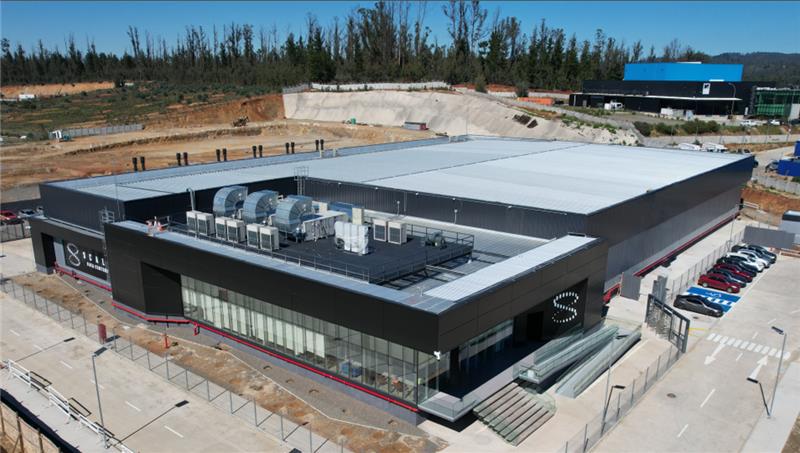
Scala Data Centers’ selected announcements describe a financing-led expansion across Brazil and Chile. According to the company, Brazil’s BNDES initially approved a BRL 180 million credit line for equipment and materials, followed by an additional BRL 200 million disbursement, bringing financing to BRL 380 million. Scala says the funds support machinery, automation, IT systems, locally supplied goods and specialist equipment for higher-density environments at operations or projects in São Paulo, Rio Grande do Sul, Rio de Janeiro and Ceará. In Chile, Scala reports securing USD 254 million in long-term project finance, with a VAT facility taking the total package to USD 328 million, for three data centers and the Nova Lampa power substation. The Chilean program covers Curauma, Lampa and Huechuraba 2 and, according to Scala, has 23 MW of contracted IT capacity plus 30 MW reserved for expansion. The provider also says the facilities will use certified renewable energy and that its Chilean designs target power usage effectiveness below 1.45. These figures and sustainability statements originate from Scala and should be treated as provider claims rather than independently verified operating results.
AI infrastructure is becoming an energy-and-finance strategy
The recurring theme is not simply the addition of data center buildings, but the assembly of capital, electricity infrastructure and high-density computing capacity as one integrated strategy. Scala explicitly connects its Brazilian investment to demand from cloud computing, artificial intelligence and machine learning, while presenting the planned AI City in Eldorado do Sul as infrastructure for large-scale AI training and inference. The dedicated Chilean substation similarly indicates that access to dependable power is becoming part of the data center product rather than a background utility concern. Strategically, Scala appears to be moving from a predominantly Brazil-centred funding model toward a repeatable South American platform: domestic development-bank financing supports Brazilian procurement and modernization, while international green-labelled project finance supports expansion in Chile. The use of project finance, VAT funding, green debentures and sale-leaseback transactions suggests that financial engineering is becoming as important to Scala’s growth model as facility design. For regional cloud and AI deployments, this points to a broader trend in which scalable power reservations, renewable-energy positioning and access to long-duration capital determine how quickly new computing capacity can be delivered.
Commitments still carry delivery, power and transparency risks
Customers should distinguish financed projects, reserved power and design targets from capacity that is commissioned and available under a service contract. Scala’s articles do not provide completion dates for the three Chilean facilities, detailed deployment milestones for the Brazilian funding, customer identities, independently measured PUE results or workload-level performance data. The company’s statements about renewable energy are based partly on certification, which does not by itself explain hourly energy matching, grid constraints or the emissions profile of backup generation. The Chilean expansion also depends on construction of a major substation, while the wider program remains exposed to permitting, equipment availability, currency movements and the execution risks inherent in capital-intensive projects. Concentration in Brazil and Chile can offer regional scale, but organizations requiring broader South American coverage should verify connectivity, disaster-recovery separation and operational support in each relevant market. Prospective customers should therefore request facility-specific evidence covering energization dates, delivered rack density, cooling architecture, service-level commitments, water practices, renewable-energy accounting and contingency plans before treating announced capacity as deployable AI or cloud infrastructure.
South American buyer guidance and sources: BNDES financing update, Chile project-finance announcement and initial BNDES credit report
For South American IT decision-makers, Scala’s direction is relevant because it links two of the region’s principal infrastructure markets through a common hyperscale, AI-density and renewable-energy proposition. The BRL 380 million BNDES financing announcement indicates continued emphasis on Brazil as the operational core, while the USD 328 million Chile financing announcement presents Chile as the next major replication point. The shorter report on the initial BRL 180 million credit line helps show how that Brazilian funding developed in stages. Our assessment is that Scala has articulated a credible capital framework for regional expansion, but financing capacity should not be confused with completed technical capacity. Enterprises and cloud operators should evaluate Scala on a site-by-site basis, prioritizing confirmed delivery schedules, power availability, network options, operational resilience and evidence that high-density cooling can support their specific AI systems. If those checks are satisfied, Scala’s combination of Brazilian scale and Chilean expansion could make it a significant option for workloads requiring in-region infrastructure; until then, the announcements are best viewed as evidence of strategic direction and funding readiness rather than proof of delivered outcomes.
