A technology stack extending from datacentres to models and customer sites
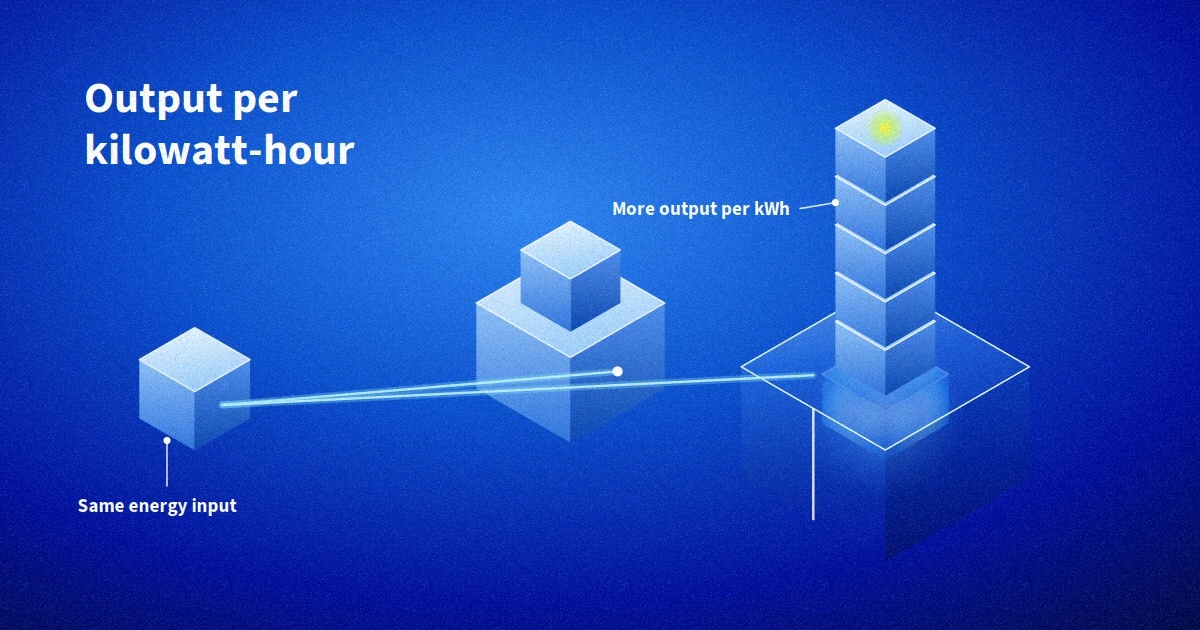
Three OVHcloud announcements present a common direction: expanding control across more layers of the cloud and AI stack. OVHcloud says its sovereign-AI strategy now encompasses self-operated datacentres and networks, GPU infrastructure, serverless access to more than 40 open-source models through AI Endpoints, and the training and fine-tuning of models through its AI Lab. The provider also highlights acquisitions involving encryption, specialised language models and speech technology, alongside the planned beta of its encrypted, AI-enabled OVHai Workspace. At the infrastructure layer, OVHcloud advocates measuring useful computing output per unit of energy rather than relying only on total consumption. It reports a group-average PUE of approximately 1.24 and WUE of 0.34 litres per kWh for fiscal 2025, with lower site-level figures for Limburg in Germany and Erith in the UK. Separately, Scality RING has become the first third-party solution certified for a defined OPCP Core scope, adding documented, S3-compatible object storage for customer-operated and potentially disconnected environments. These figures, capabilities and milestones are claims and descriptions published by OVHcloud rather than independently verified findings.
Sovereignty is becoming an architectural model, not just a hosting location
The emerging trend is OVHcloud’s attempt to turn European sovereignty into an end-to-end operating model. Its proposition is moving beyond data residency towards control of hardware, cooling, networks, encryption, models, deployment location and selected partner integrations. The AI and datacentre initiatives reinforce one another: greater AI demand raises energy and cooling requirements, while ownership of physical infrastructure gives OVHcloud more scope to optimise those systems and present predictable resource economics as part of its differentiation. The Scality certification adds another dimension by taking OVHcloud’s infrastructure model into customer datacentres, including air-gapped settings. Strategically, this points to a hybrid sovereign cloud in which workloads can run in OVHcloud facilities or on premises under a more consistent provisioning framework. For Western Europe, where regulated industries, public bodies and critical infrastructure operators frequently combine data-control requirements with sustainability obligations, that alignment is regionally relevant. It also shows OVHcloud seeking an ecosystem position: retaining control over the foundation while allowing documented third-party components above it.
Ambition exceeds the evidence currently available
Decision-makers should distinguish the integrated strategy from the maturity and scope of individual components. The AI Summit article is partly forward-looking: OVHai Workspace was awaiting beta announcement, while the practical performance, availability, model quality and enterprise operating characteristics of several AI initiatives are not established in the supplied material. Sovereign operation under European law may reduce some jurisdictional concerns, but it does not by itself resolve governance, model-risk, security, portability or compliance requirements. The sustainability comparison also needs careful interpretation. OVHcloud combines its own fiscal-2025 group and site figures with external benchmarks from different countries and years, so the table is not a controlled like-for-like comparison. Its claims of cooling-power reductions of up to 50% and water reductions of up to 30% are relative to its original design and do not demonstrate results for every facility or workload. Likewise, Scality’s certification covers a specified compatibility configuration; OVHcloud explicitly states that it is neither a regulatory qualification nor certification of the entire platform. Licensing remains separate, deployment starts with a minimum documented topology, and support and update arrangements for disconnected environments must be defined for each architecture.
Western European buying guidance from the sovereign AI strategy, datacentre efficiency analysis and Scality certification announcement
OVHcloud’s direction is coherent: build a European-controlled path from energy-efficient physical infrastructure to cloud services, models and on-premises deployments. That makes the provider worth evaluating where Western European organisations need a combination of jurisdictional control, hybrid operation and AI infrastructure. Buyers should nevertheless test each layer separately rather than treating sovereignty as a blanket assurance. Procurement should request site-specific PUE and WUE data, workload-relevant measures such as tokens or samples per joule, the methodology behind Scope 3 reporting, model and API availability, encryption boundaries, exit options, and operational responsibility in on-premises or air-gapped deployments. A proof of concept should also confirm that the certified Scality configuration meets required resilience, recovery and scaling targets. The provider’s own account of its AI roadmap establishes the strategic ambition; its efficiency metrics and cooling claims identify the intended infrastructure advantage; and the documented OPCP Core integration with Scality RING provides a concrete, though narrowly scoped, example of the hybrid model. The independent conclusion is that OVHcloud is assembling a differentiated sovereign-AI architecture for Western Europe, but selection should depend on verified workload-level outcomes and contractual controls rather than the breadth of the narrative alone.
