A European technology stack extending from datacentres to AI models
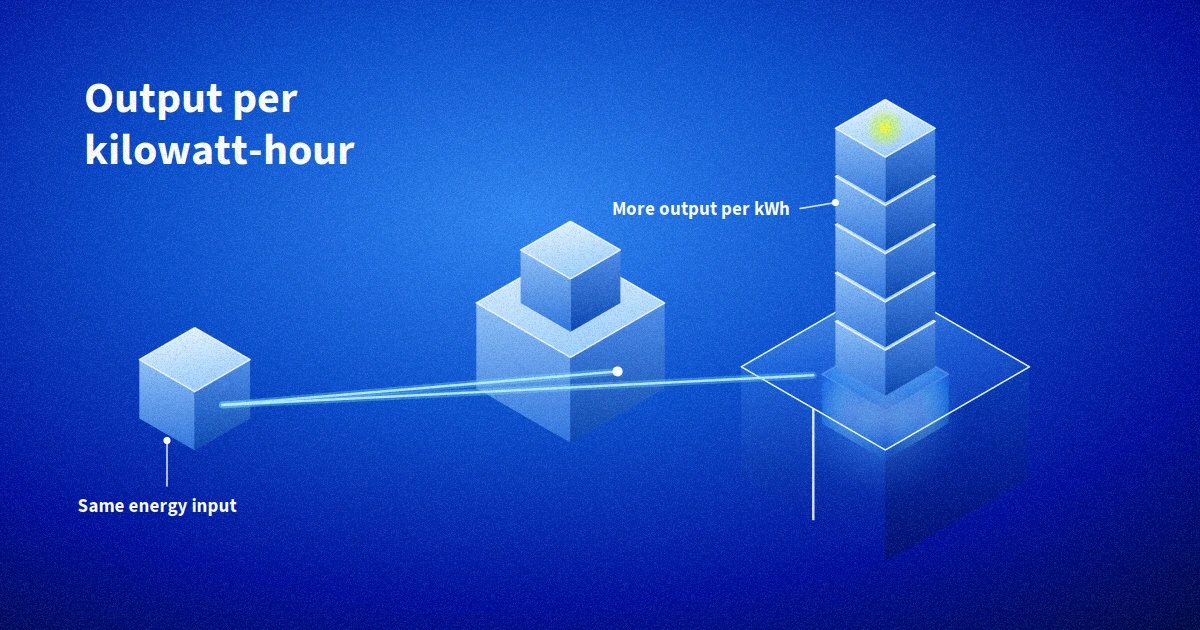
OVHcloud presents three connected developments around control of infrastructure, data and AI. The provider says its sovereign-AI strategy now spans self-operated datacentres and networks, GPU infrastructure, serverless access to more than 40 open-source models through AI Endpoints, model development through its AI Lab, and planned agentic-AI features in OVHai Workspace. It also reports acquisitions involving encryption specialist Seald, specialised model developer Dragon LLM—renamed OVHai LLM—and speech-recognition company Gladia. At the infrastructure layer, OVHcloud advocates measuring useful compute output per unit of energy, including tokens per joule for inference, alongside PUE and WUE. It reports a group-average PUE of approximately 1.24 and WUE of 0.34 litres per kWh for FY2025, with lower figures at its Limburg and Erith facilities. Separately, Scality RING has become the first third-party product certified for a defined OPCP Core configuration, giving customers a documented route to deploy S3-compatible object storage in their own datacentres, including disconnected environments.
Sovereignty is becoming an operational architecture rather than a hosting location
Taken together, the announcements indicate that OVHcloud is broadening its interpretation of European cloud sovereignty. The strategy is not limited to keeping data in a European facility: it increasingly covers hardware provisioning, cooling, encryption, storage, model access and model development. The emerging trend is a hybrid sovereign stack in which customers can consume managed AI services in OVHcloud facilities while retaining the option to operate selected infrastructure and data services on premises. Certification of Scality RING suggests that OPCP is intended to become an integration foundation for partner technologies rather than a closed, OVHcloud-only environment. Meanwhile, the emphasis on direct-to-chip water cooling and predictive control links AI expansion to industrial efficiency. For Western Europe, where regulated organisations often need to reconcile AI adoption with data-location, security and environmental obligations, this combination is strategically relevant: OVHcloud is positioning operational control and resource efficiency as parts of the same AI proposition.
The claims require workload-level and deployment-specific validation
There are important limits to what buyers can infer from these provider publications. OVHcloud’s AI article is partly forward-looking: OVHai Workspace was described as approaching beta, while further strategy and product announcements were scheduled for its November 2026 summit. The sustainability figures are reported by OVHcloud, and some comparisons use benchmarks from different countries and years; they therefore should not be treated as like-for-like proof of superiority. The proposed tokens-per-joule and samples-per-joule measures are useful concepts, but the article does not provide workload-specific results for OVHcloud AI services. Scality certification is also deliberately narrow: it confirms compatibility within a documented OPCP Core scope, not regulatory qualification or certification of the complete platform, and Scality RING was not yet available through the OPCP Cloud Store. Sovereign positioning likewise does not by itself establish compliance with an organisation’s legal, sectoral or security requirements. Buyers still need to examine contracts, support arrangements, update processes for disconnected deployments, model governance, service-level commitments and site-specific environmental data.
Decision guide and sources: OVHcloud’s sovereign-AI direction
For IT decision-makers in Western Europe, OVHcloud’s direction merits attention where AI, sensitive data and hybrid operations must be addressed together. The strongest aspect is architectural coherence: the provider is trying to connect its infrastructure ownership with European hosting, AI models, encryption, efficient cooling and reproducible on-premises deployments. That does not remove the need for due diligence. A practical evaluation should compare actual inference efficiency and cost on representative models, request facility-specific PUE and WUE data, verify applicable jurisdiction and operational access controls, and test the certified Scality configuration under the intended topology and recovery procedures. The underlying provider claims and technical scope can be reviewed in the sovereign AI strategy article, the sustainable datacentre efficiency analysis and the Scality RING certification announcement. The independent conclusion is that OVHcloud is developing a differentiated European proposition around end-to-end control, but procurement decisions should rest on validated workload results and contractual assurances rather than the breadth of the stated vision alone.
