AI-assisted products, agentic engineering and incident response
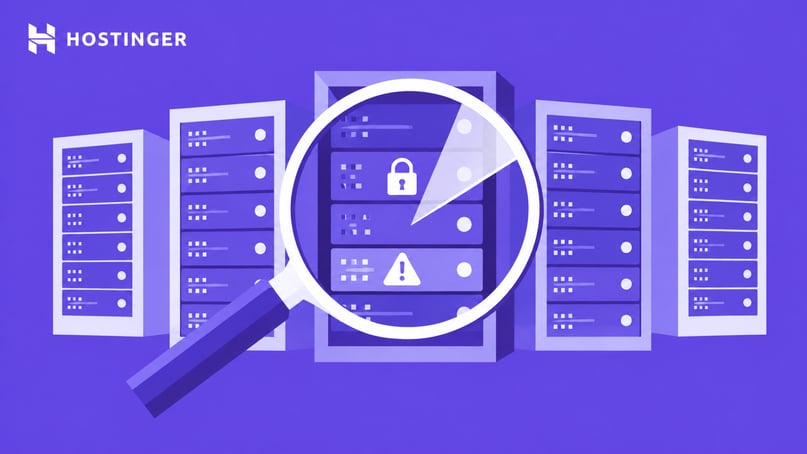
Three Hostinger articles from November 2026 present a provider investing in automation at both the customer and engineering layers while managing the security dependencies of shared infrastructure. Hostinger says its AI Builder can generate websites from attached documents, spreadsheets, presentations and structured data, while Reach can create an editable promotional email sequence and provide WhatsApp auto-replies. Its ecommerce service now processes CSV imports in the background. Internally, Hostinger describes hforge, a workflow in which coding agents plan and implement changes, separate agents test them on preview deployments, and humans retain merge authority. The company estimates that this approach increased one engineer’s concurrent workload from four tasks to as many as 12. A separate incident report states that an attacker entered through a vulnerable customer website on a Phoenix shared-hosting server and then exploited a previously unknown LiteSpeed Web Server vulnerability to escape account isolation. Hostinger reports that code was run or credentials were read on about 400 accounts, after which it migrated accounts, restored affected sites from earlier backups and deployed LiteSpeed’s fix across its shared-hosting servers.
The emerging model: reduce human effort without removing human control
Taken together, the material suggests that Hostinger’s technology direction is broader than adding generative AI to a website builder. The recurring priority is to turn complex, multi-step work into supervised automation: business files become websites, a short description becomes a marketing workflow, imports continue without blocking store administration, and engineering agents produce changes accompanied by evidence from real builds. The strategic pattern is agentic orchestration with explicit control points rather than fully autonomous operation. Hostinger’s reported insistence that only humans merge code, and its decision to stop retrospectives from launching fixes without approval, show that the company is learning where automation requires boundaries. For Eastern European decision-makers, Hostinger’s Lithuanian context gives this direction regional relevance, particularly for organizations evaluating a provider originating in the region. However, the selected material describes globally delivered products and a US server incident; it does not establish Eastern European infrastructure locations, data residency or region-specific service levels.
Security dependencies and unverified efficiency claims remain material
The same articles expose important limitations. Hostinger’s Phoenix account indicates that shared-hosting isolation depended partly on LiteSpeed and CloudLinux CageFS, and that a zero-day vulnerability could turn the compromise of one customer site into root-level server access. Hostinger says its internal management, login and backup systems showed no evidence of compromise, but that statement comes from the provider while its investigation was still ongoing. Customers should therefore seek the final incident findings, notification scope, credential-rotation guidance and evidence that the additional configuration controls remain effective. The hforge results are also internal estimates and operational examples rather than independently benchmarked productivity measurements. The workflow consumes more tokens, can make individual tasks slower and requires preview or staging environments. Human reviewers still found visual and release-order defects that agent-generated proof missed. Finally, these sources provide little evidence about Hostinger’s VPS or cloud architecture, availability commitments, regional capacity, workload portability or enterprise governance, so the reported progress in shared hosting, website tooling and software delivery should not be generalized to those services.
Decision guidance from the Hostinger security incident report
For IT buyers in Eastern Europe, the positive signal is not AI branding alone but Hostinger’s apparent effort to connect automation with testing, human approval and continuous process improvement. Its prompt publication of a detailed incident timeline and stated deployment of a vendor fix are useful operational signals, yet they do not replace customer due diligence. Buyers should separate three evaluations: whether the end-user automation fits business workflows, whether Hostinger can demonstrate disciplined engineering controls at scale, and whether its infrastructure and contractual safeguards satisfy regional security, resilience and data-location requirements. Proof-of-concept testing should cover generated-site accuracy, file handling, messaging-credit controls, restore procedures and failure isolation. Procurement teams should also request evidence specific to the service under consideration, especially for VPS or cloud workloads. The underlying provider material is available in the Week 45 product update, the hforge engineering account and the Phoenix server incident report.
