High-density capacity, Norwegian growth and more structured reporting
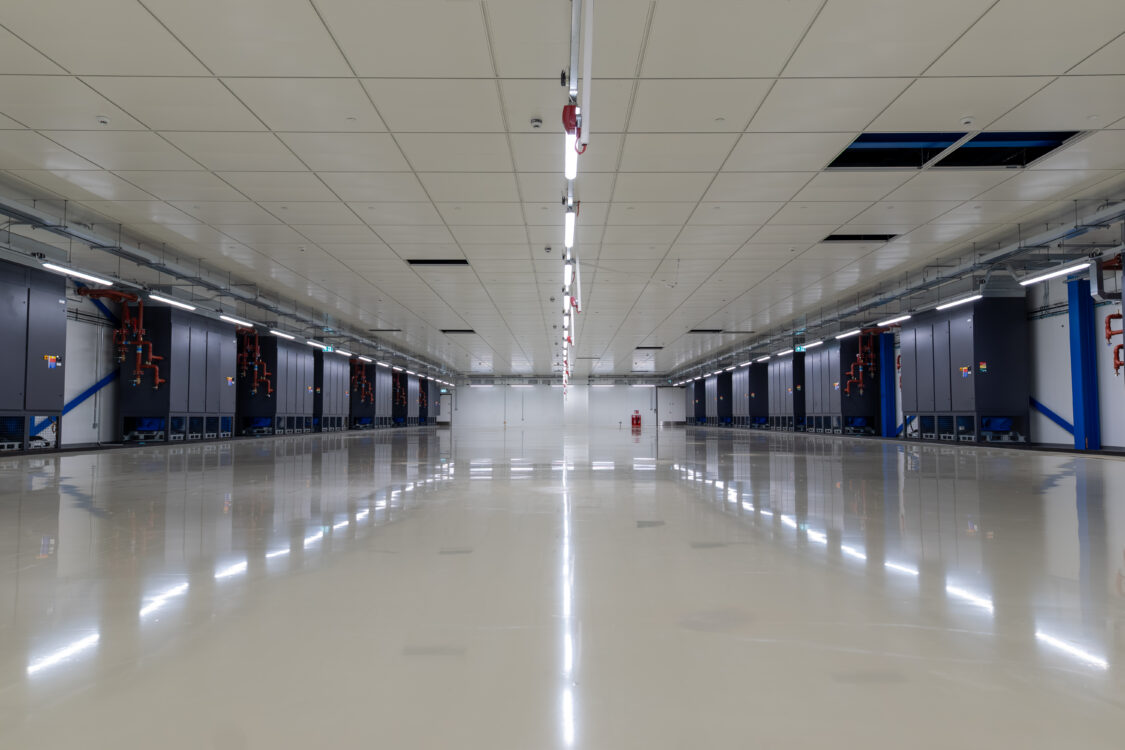
Green Mountain’s selected announcements describe three connected areas of development. In London, the provider says it has signed a 14 MW agreement with an unnamed neocloud operator for recently delivered capacity at its 37 MW LON-East campus. Green Mountain presents the facility as suitable for AI, cloud and high-performance computing, offering air, liquid and hybrid cooling and support for rack densities above 100 kW. In Norway, it is developing a data center at Undheim in Rogaland with a planned total power capacity of 100 MW and an expected 100 permanent on-site jobs. A Menon Economics analysis cited by Green Mountain estimates that construction could support approximately 4,700 full-time equivalents across Norway, including nearly 1,300 in Rogaland, while operations at full scale could support around 135 FTEs. Separately, Green Mountain says its 2025 sustainability report was prepared in line with CSRD and ESRS frameworks, despite these not yet being a legal requirement for the company. It also highlights renewable electricity for its Norwegian operations, water and energy efficiency work, employee development and operating heat reuse at Rjukan, where surplus data-center heat supports land-based trout production.
AI infrastructure is becoming part of a broader license-to-operate strategy
Taken together, the articles suggest that Green Mountain is pursuing more than straightforward capacity expansion. Its technology direction is moving toward power-dense AI infrastructure, with liquid and hybrid cooling becoming central design considerations rather than peripheral options. The London contract indicates an effort to serve neocloud operators in a major European connectivity market, while the Undheim development reinforces Norway as a base for large-scale capacity. For the Nordic market, the emerging trend is the combination of AI-oriented engineering with arguments about local economic contribution, renewable power, resource efficiency and regulatory-style transparency. Heat reuse is especially relevant to this positioning because it connects data-center operations with another local industry rather than treating waste heat solely as an efficiency metric. Voluntary alignment with European sustainability-reporting standards also suggests that Green Mountain expects procurement, financing and expansion decisions to require increasingly structured environmental and social information.
Large ambitions still require customer-level due diligence
The evidence has important limitations. The capacity, cooling and connectivity descriptions come from Green Mountain, and the provider does not disclose the LON-East customer, its workload profile, the implementation schedule or independently measured operating performance. Support for rack densities above 100 kW demonstrates a stated design capability, but it does not establish the density, energy consumption or cooling efficiency of the customer’s eventual deployment. The Undheim employment, value-creation and tax figures are estimates from an economic analysis rather than observed outcomes, and they depend on the project reaching its planned scale and on assumptions about procurement and indirect activity. The sustainability article describes progress but does not reproduce the underlying performance indicators, baselines or assurance status needed to compare Green Mountain consistently with alternative operators. Nordic buyers should also distinguish between the renewable-electricity claim for Norwegian operations and the characteristics of capacity elsewhere in Green Mountain’s European footprint.
Decision guidance from the LON-East agreement, Undheim analysis and 2025 sustainability update
For IT decision-makers in the Nordics, Green Mountain merits attention where high-density AI capacity, Norwegian energy sourcing and European connectivity need to be considered together. The provider’s announcement of the 14 MW LON-East contract offers evidence of commercial focus on neocloud and AI customers, while the Undheim economic-impact article shows how it is framing Norwegian expansion in terms of employment and regional value. Its 2025 sustainability-report announcement points toward more formal disclosure and practical heat reuse. These signals are strategically coherent, but procurement teams should validate power availability, delivery dates, cooling configurations, resilience, network options, contractual sustainability attributes and auditable site-level metrics for the specific campus under consideration. The independent conclusion is that Green Mountain is positioning itself as a Nordic-rooted operator able to support European AI growth, yet the strength of that proposition should be judged through workload-specific technical and contractual evidence rather than company-wide claims alone.
