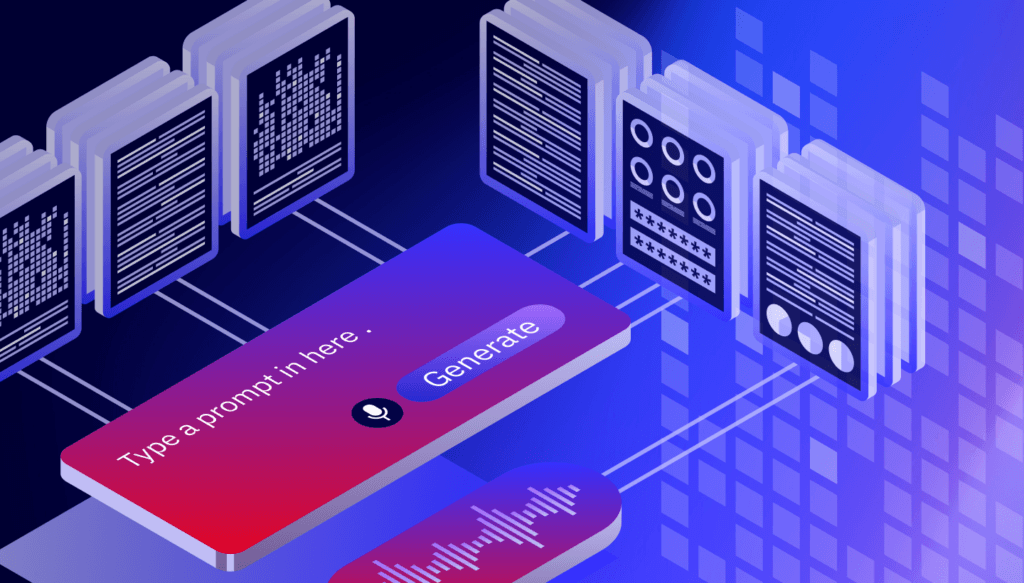
A two-sided response to AI-driven data risk
Backblaze’s selected articles present two related priorities: supplying object storage for data-intensive AI pipelines and protecting endpoint data from AI agents with destructive permissions. For infrastructure workloads, the provider proposes Backblaze B2 as a durable capacity tier paired with NVIDIA AIStore, which caches active datasets close to compute and publishes outputs back to B2. Backblaze also says its network measurements show AI-related traffic arriving in concentrated, variable bursts rather than the more predictable flows associated with traditional workloads. Its performance testing covers different object sizes and single- and multi-threaded transfers, while Drive Stats tracks the physical disk fleet underlying the service. At the endpoint, Backblaze argues that Git, synchronization services and operating-system recycle bins do not provide complete recovery when an agent deletes local files. It promotes automated off-device backup, version history, centralized administration and deployment through endpoint-management tools as the final recovery layer after sandboxing and permission controls.
The emerging trend is separation of capacity, compute and control
The strategic direction is a tiered and increasingly multi-cloud model in which durable object storage is separated from expensive, fast storage near GPUs. Backblaze is positioning B2 less as an all-purpose execution environment and more as the persistent system of record behind changing compute providers and local cache layers. Its NVIDIA AIStore integration illustrates this approach: retain complete datasets and checkpoints in object storage, stage only active revisions near compute, and use S3 compatibility to reduce application changes. The endpoint article extends the same principle to operational resilience. Data should have an independently managed copy outside the reach of the agent, user or compromised device that can alter the primary version. Taken together, the articles suggest that Backblaze sees AI storage as both a data-movement problem and a control-boundary problem. For North American IT teams adopting multiple AI tools and compute services, that direction may be relevant where portability, recoverability and predictable storage economics matter more than obtaining every infrastructure component from one hyperscaler.
Operational complexity remains with the customer
The proposed architecture does not eliminate engineering work. Backblaze explicitly notes that customers must operate NVIDIA AIStore, size its local tier for concurrent working sets, manage cache eviction, create immutable dataset revisions and measure cold reads, warm reads, processing and publication separately. Caching is most valuable when jobs repeatedly reuse data; a single sequential pass may be better served by direct streaming from B2. Write-through also adds local work before upload. The performance and network evidence has further limits: Backblaze reports measurements from its own infrastructure, describes Network Stats as a young dataset and says two quarters of performance results are insufficient for firm conclusions. Drive Stats covers hard drives rather than SSDs, so it cannot represent every tier used in an AI pipeline. Endpoint backup also remains a recovery mechanism rather than a substitute for least privilege, sandboxing, source control or real-time replication. Product capabilities, retention periods, integrations, pricing characteristics and benchmark results cited in these articles are provider claims and should be validated against contracts, regional service requirements and representative workloads.
Decision guidance and sources: Backblaze’s AI storage analysis
For North American IT decision-makers, Backblaze merits evaluation where object storage must remain independent of a changing AI compute layer or where endpoint recovery must cover files outside repositories and synchronized folders. A proof of concept should reproduce expected object sizes, concurrency, cache reuse, checkpoint publication and network paths, while procurement should verify data location, support, security controls, recovery permissions and total transfer costs. Teams should also test deletion recovery under their actual MDM or RMM configuration rather than relying on feature descriptions. The useful takeaway is not that one storage tier fits every AI workload, but that durable retention, high-speed delivery and endpoint recovery should be designed as distinct controls. The selected provider sources are Backblaze’s guidance on recovering files deleted by AI agents, Backblaze’s assessment of changing AI storage requirements, and Backblaze’s NVIDIA AIStore and B2 architecture. These provide a credible basis for workload testing, but not a substitute for independent validation.
