Sovereign infrastructure, efficient inference and explainable government AI
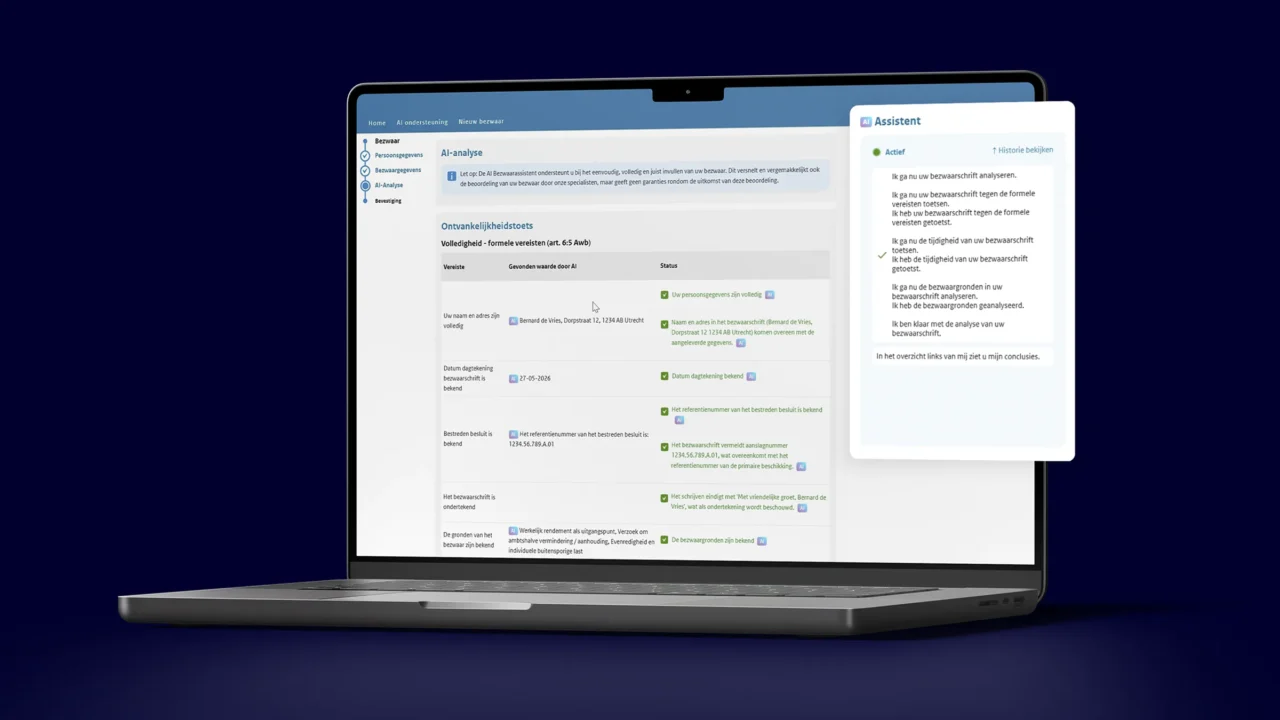
Three 2026 announcements position Nebul at the intersection of Dutch digital sovereignty and production AI. In April, the provider said it had joined six other Dutch cloud companies in signing the Open Cloud Alliance manifesto, which calls for sovereignty requirements in public procurement, stronger data-protection conditions, open standards and migration of critical government workloads to European platforms. The alliance claims that its members already have platforms, capacity and expertise available under European jurisdiction. In July, Nebul described an ongoing proof of concept with DDN and NVIDIA focused on accelerating the key-value cache used during AI inference. According to the companies, RoCE-based infrastructure validation had been completed and early benchmarking indicated improvements in time-to-first-token, although no numerical results were published. A separate initiative with Blueriq and Deloitte applies sovereign and explainable AI to Dutch government objection handling. Nebul says its private European AI cloud provides the infrastructure and model-specialization layer, while Blueriq supplies rule-driven decision logic and Deloitte addresses governance, compliance and organizational design. The proposed workflow supports activities such as checking submissions, summarizing files, finding relevant case law and drafting decisions, with final judgment remaining with public-sector professionals.
Sovereignty is becoming an operational AI architecture
Taken together, the announcements suggest that Nebul is trying to move sovereignty beyond data-location messaging and turn it into an operational model for AI. Its direction combines European jurisdiction, open and portable cloud architecture, NVIDIA-based accelerated computing, high-performance data infrastructure, domain-specialized models and human-controlled workflows. The recurring strategic theme is control across the full stack: control over where data resides, how models are deployed, how infrastructure is utilized and how consequential decisions are reviewed. The DDN collaboration also reveals a shift from access to scarce GPU capacity toward the economics of sustained inference. Metrics such as GPU utilization, cost per token, tokens per watt and time-to-first-token are presented by the partners as increasingly important once AI moves into production. For the Netherlands, the government objection-handling initiative provides a locally relevant application of that strategy: Dutch administrative processes require explainability, legal context and accountable human judgment, not merely generic model access. Nebul therefore appears to be pursuing a sovereign-hybrid AI-cloud position in which regulatory alignment and infrastructure efficiency are intended to reinforce each other rather than operate as separate propositions.
Promising alignment, but procurement evidence remains incomplete
The direction is coherent, but decision-makers should separate announced intent from demonstrated operating results. The inference work is still described as an ongoing proof of concept, and the articles provide no benchmark configurations, baseline comparisons, cost figures, energy measurements, service-level commitments or production-scale customer outcomes. Claims about lower latency, higher utilization and improved AI economics therefore require independent technical validation under representative models, sequence lengths, concurrency levels and failure scenarios. Similarly, the government initiative outlines a practical blueprint but does not report deployment scale, measured improvements in processing quality or time, model-error rates, legal review outcomes, or citizen impact. Human approval is an important safeguard, but it does not by itself resolve risks involving biased summaries, incomplete retrieval, automation bias, auditability and responsibility across multiple suppliers. The sovereignty proposition also needs detailed due diligence: European jurisdiction and open standards are relevant, yet buyers should examine every dependency in the hardware, software, model, support and data-processing chain. Portability should be tested rather than inferred, while the alliance’s assertion that critical workloads can be moved within weeks will depend heavily on application architecture, data classification, integration requirements and procurement constraints.
Decision view from the Open Cloud Alliance announcement, the inference collaboration and the government AI initiative
For IT leaders in Western Europe, Nebul is relevant where AI infrastructure economics and jurisdictional control must be assessed together—particularly in Dutch public administration and regulated workloads. Its strongest strategic signal is not any single claimed capability, but the attempt to connect sovereign procurement, optimized inference and explainable domain workflows in one proposition. Buyers should use the digital-sovereignty commitments to build contractual requirements for jurisdiction, portability, open interfaces and exit procedures; use the DDN and NVIDIA proof-of-concept claims to define reproducible performance and cost tests; and use the objection-handling design to evaluate explainability, audit trails, human authority and legal accountability. A controlled pilot should compare total cost per completed business task—not only token-level metrics—and include security, resilience, data governance and supplier-exit testing. On the supplied evidence, Nebul presents a strategically relevant Dutch sovereign-AI direction, but production readiness and economic advantage should be established workload by workload before broader commitment.
