Oulu expansion connects capacity, regulation and resource efficiency
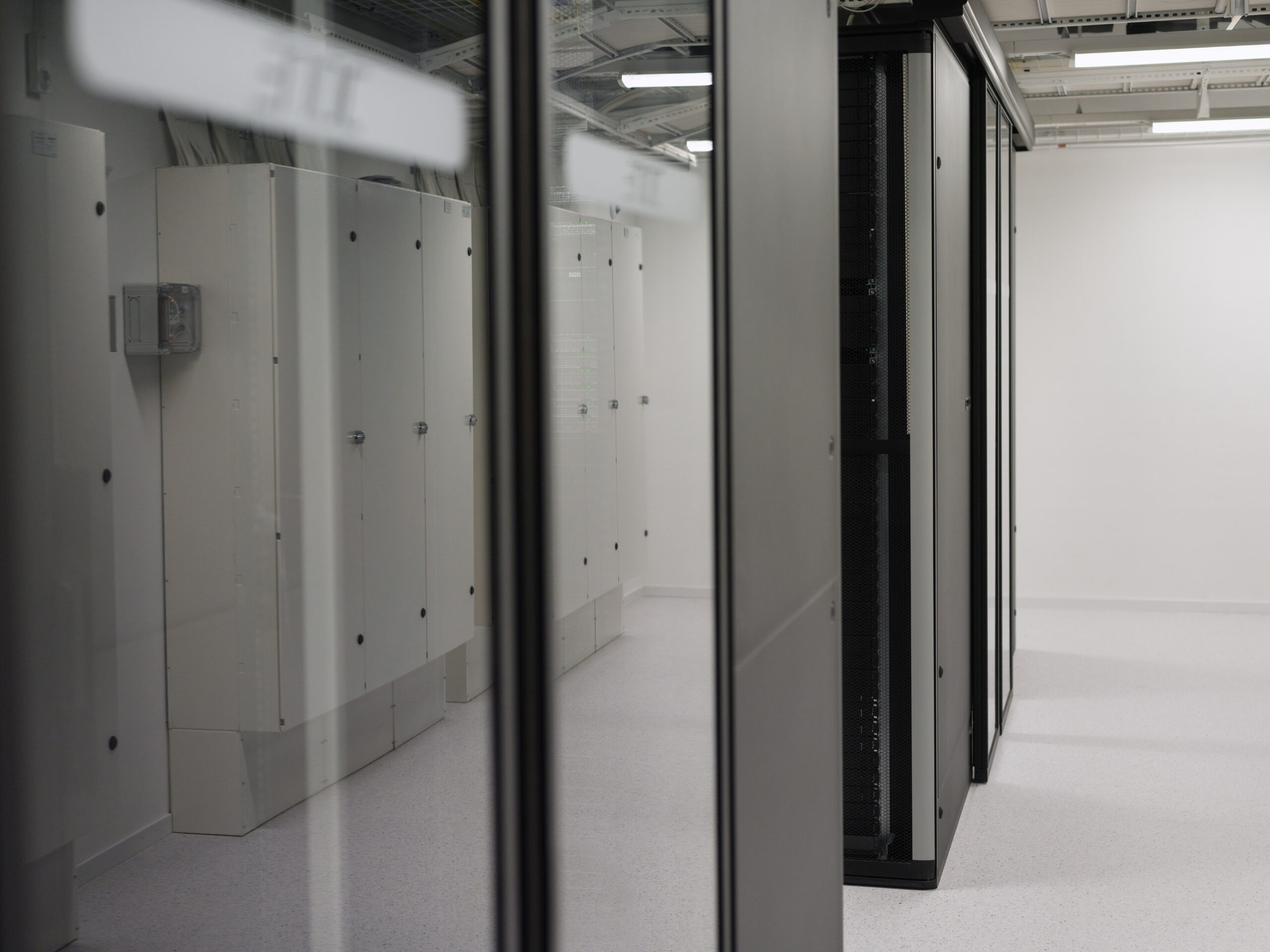
GleSYS presents three connected priorities for its Nordic IaaS business: expanding physical capacity for AI-era workloads, positioning European jurisdiction as an infrastructure attribute, and improving operational sustainability. The provider says it is converting a former industrial facility in Oulu, Finland, into a data center campus, with initial capacity targeted for November 2026 and long-term potential of up to 300 MW. According to GleSYS, the brownfield project requires substantial rebuilding of fiber routes, flooring, power delivery and cooling, while being designed to support liquid-cooled, high-density environments. Separately, GleSYS argues that the EU Data Act, national NIS2 enforcement, DORA, the Cyber Resilience Act and evolving AI regulation are making portability, supply-chain governance, incident reporting and legal jurisdiction more important in cloud procurement. Its sustainability release reports that its Swedish and Finnish data centers used renewable electricity backed by Guarantees of Origin in 2025, achieved a group weighted-average PUE of 1.27, reused 3,696 MWh of residual heat and kept some servers operating for up to ten years through repair and refurbishment. These figures and comparisons are provider-reported rather than independently verified here.
A Nordic infrastructure strategy built around controlled growth
Taken together, the material indicates that GleSYS is not treating AI solely as a cloud-software opportunity. Its direction starts with the physical constraints created by denser computing: electricity, liquid cooling, structural loading, fiber capacity and phased expansion. Oulu also connects that engineering agenda to a broader European proposition based on local operation, European ownership and jurisdiction, data residency and infrastructure control. This is particularly relevant in the Nordics, where access to renewable power, cooler conditions, district-energy systems and established technology ecosystems can support data center development. The emerging trend is convergence: AI readiness, sovereign infrastructure and environmental efficiency are becoming parts of the same procurement proposition rather than separate initiatives. GleSYS appears to be extending its existing mix of colocation, dedicated hardware, cloud and hybrid infrastructure so customers can move between deployment models without immediately leaving its Nordic operating environment.
Ambition still requires technical and contractual validation
The selected material leaves several issues for buyers to test. The potential 300 MW scale is a long-term development ceiling, not evidence that this capacity is funded, available or contracted today; the first-phase delivery target likewise does not establish production readiness. GleSYS provides no detailed rack-density limits, liquid-cooling specifications, network topology, redundancy design, service levels, pricing, GPU availability, latency measurements or customer adoption figures. Its sustainability metrics are self-reported, and the supplied articles do not provide independent assurance details for the PUE comparison, heat-reuse total or hardware-lifetime claims. Guarantees of Origin also describe electricity sourcing attributes but do not by themselves show matching between consumption and renewable generation at every hour. Extending equipment life may reduce embodied impacts and electronic waste, but customers should establish how GleSYS manages performance, component failure, firmware support and security over longer hardware cycles. Regulatory statements should also be checked with legal advisers because implementation, supervisory practice and proposed EU rules can change. Finally, GleSYS itself acknowledges brownfield complications in Oulu, including unreliable inherited network documentation and flooring that could not support the new requirements, making commissioning evidence especially important.
Decision view and sources: Campus Oulu development, EU sovereignty analysis and 2025 sustainability results
For Nordic IT decision-makers, GleSYS merits consideration where European jurisdiction, dedicated or hybrid infrastructure and proximity to Sweden or Finland carry substantial weight. The provider’s account of Campus Oulu signals meaningful intent to support denser AI and high-performance environments, while its assessment of European data-sovereignty rules shows that compliance and customer control are central to its positioning. Its reported sustainability performance adds a relevant operational dimension. Buyers should nevertheless base selection on commissioned capacity rather than ultimate campus potential and request facility-level efficiency data, resilience architecture, connectivity options, security evidence, audit rights, exit procedures and binding service commitments. The strategic proposition is coherent: Nordic physical infrastructure designed to combine AI density, European control and resource efficiency. The procurement case will depend on how completely GleSYS can translate that proposition into measurable production services and enforceable contracts.
