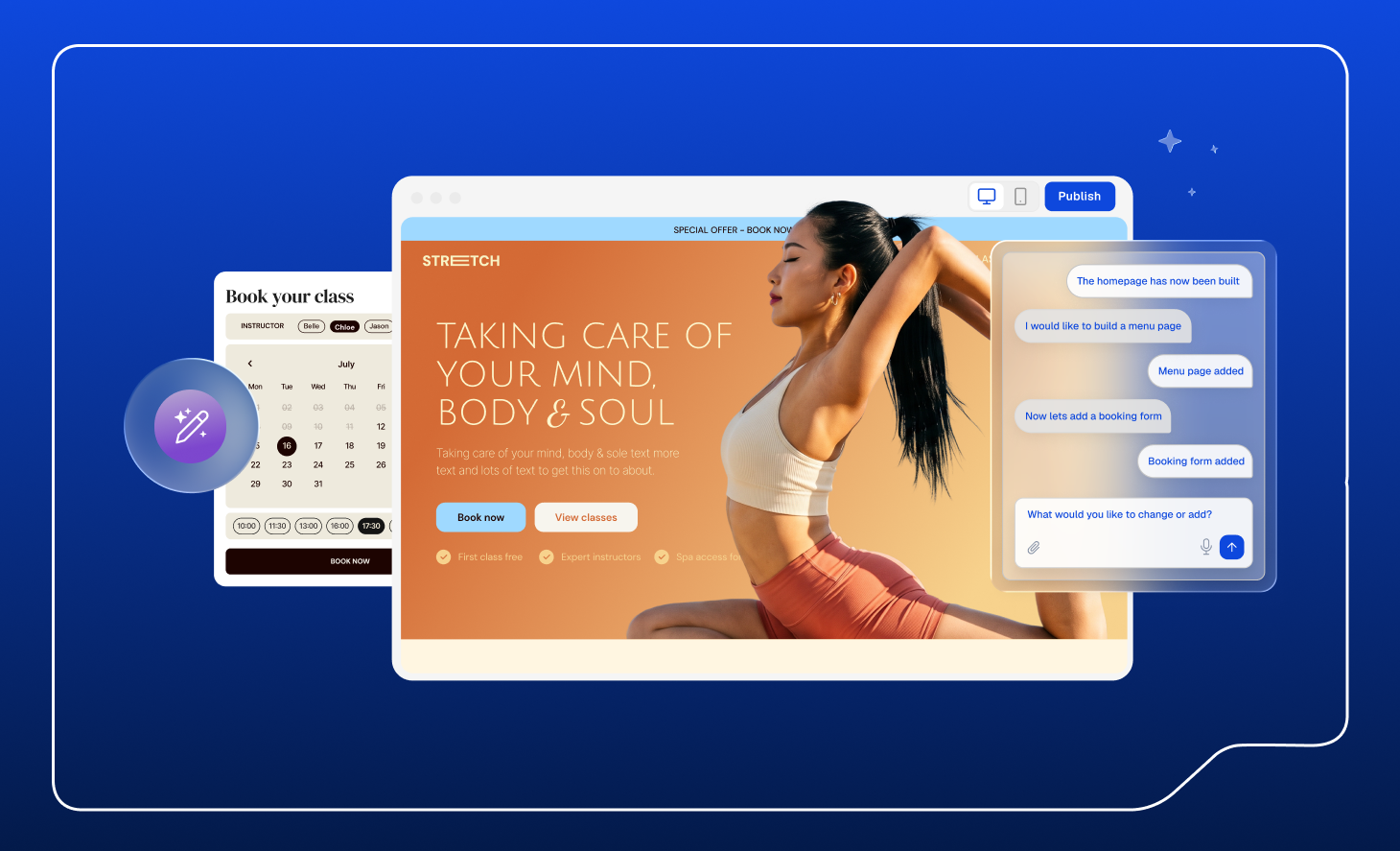
From website hosting to prompt-driven application delivery
Three Fasthosts articles indicate a product direction that combines AI-assisted development with established hosting and security services for UK customers. Fasthosts says its AI App & Site Builder can generate websites, browser-based applications, client portals, internal tools and lead-capture workflows from plain-English prompts. The provider positions downloadable source code, automatic deployment, domains, email, SSL and European hosting as parts of the package. Usage is governed by monthly AI credits, with plans supporting different numbers of projects, storage allocations and email accounts. In a separate operational update, Fasthosts reports that WordPress 7.1.4 addresses 22 vulnerabilities and says its web application firewall protects hosted sites, while customers using its WordPress hosting with automatic updates enabled had already received the patch. These are provider statements rather than independently verified performance or security findings.
AI becomes the interface to a bundled cloud service
The emerging trend is not simply the addition of generative AI to a conventional site builder. Fasthosts is presenting natural-language interaction as a new control layer for creating and changing hosted software, while keeping deployment, domains, certificates, email and support within one service relationship. Its examples concentrate on practical requirements of smaller UK organisations: booking systems, quotation tools, staff rotas, customer portals, landing pages and early-stage MVPs. The option to export source code suggests an attempt to reduce lock-in concerns and accommodate agencies or developers that want to continue work elsewhere. At the same time, the WordPress material shows that Fasthosts is not abandoning managed operations in favour of AI alone. The broader direction is a combination of faster creation at the application layer and provider-managed maintenance beneath it—a potentially relevant proposition for UK businesses with limited development and infrastructure capacity.
Fast generation does not remove governance or engineering risk
Fasthosts provides examples and product descriptions, but the selected material does not establish how generated applications perform under load, how reliably complex requirements are implemented, or how security testing, accessibility, backups, data retention and regulatory obligations are handled for customer-built workflows. The provider clarifies that the product creates web applications rather than native mobile apps, an important boundary for buyers. Credit-based editing may also make ongoing cost dependent on how frequently teams regenerate or refine projects. Source-code export can improve portability, but organisations should verify whether the exported application includes everything required to operate independently and assess maintainability before relying on generated code for business-critical processes. The WordPress article reinforces another limitation of automation: Fasthosts recommends backups, staging for critical or heavily customised sites, and separate updates for themes and plugins. UK decision-makers should therefore treat rapid generation and automatic patching as workflow accelerators, not substitutes for ownership, testing, access control and incident planning.
Conclusion and sources: AI builder use cases, product introduction and WordPress security guidance
For IT decision-makers in the UK and wider Western Europe, Fasthosts’ direction is most relevant where speed, local business support and a bundled operating model matter more than highly specialised cloud architecture. A sensible evaluation should begin with a contained use case—such as a campaign page, internal workflow or low-risk booking tool—and test generated-code quality, security controls, accessibility, portability and total credit consumption before broader adoption. Buyers should also confirm hosting location and contractual data-handling terms rather than infer them from general references to European hosting or UK data centres. The provider’s detailed AI App & Site Builder scenarios and launch explanation describe the intended creation and deployment experience, while its WordPress 7.1.4 security article illustrates the managed-maintenance side of the proposition. CloudInsights’ assessment is that the combination is strategically coherent for smaller organisations, but suitability for critical applications depends on technical and contractual validation beyond the claims in these articles.
