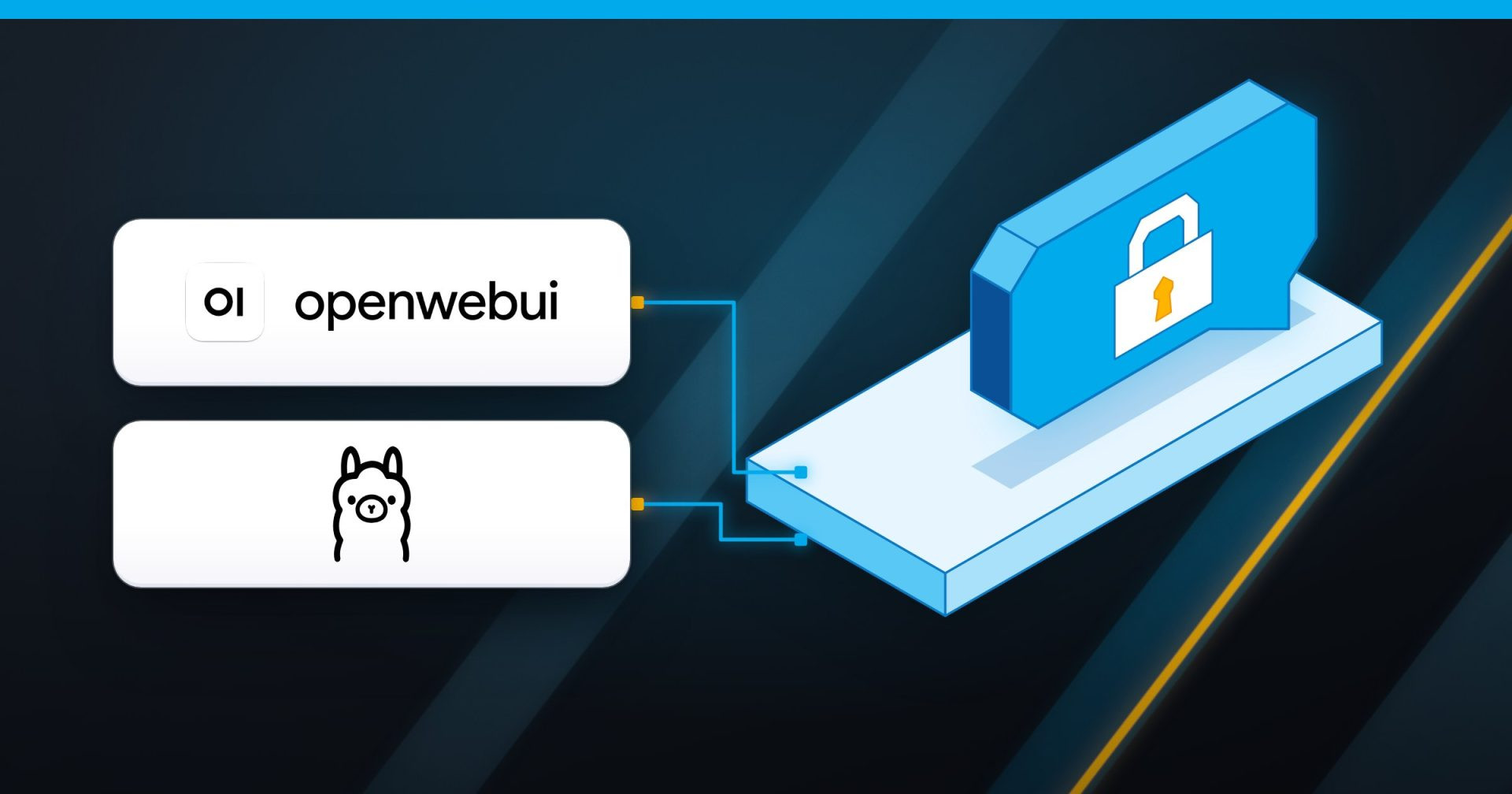
From virtual servers to privately operated AI stacks
Across the selected articles, Contabo presents its VPS and GPU VPS services as infrastructure for assembling self-hosted AI rather than merely hosting conventional applications. The provider’s comparison of LibreChat, Open WebUI and AnythingLLM separates the tools by operating model: Open WebUI for relatively simple Ollama-first deployments, LibreChat for multi-provider teams, and AnythingLLM for document-centred use. Its accompanying Open WebUI tutorial describes a two-container stack with Ollama, Docker Compose, HTTPS, backups and CPU-to-GPU sizing. A third article extends this architecture with SearXNG, a self-hosted metasearch service whose JSON endpoint can supply web results to Open WebUI and other AI tools. These are provider-published descriptions, not independent performance tests, but together they outline a coherent stack: a VPS hosts the interface and supporting services, while models run locally on CPU or GPU, or behind a remote API.
The emerging strategy is modular, open-source AI infrastructure
The recurring trend is a shift from selling isolated compute capacity toward positioning Contabo as an operational foundation for modular AI systems. Docker Compose is the common deployment layer; OpenAI-compatible endpoints and MCP support provide portability between models and tools; and persistent volumes, reverse proxies and internal networks form the operational baseline. Contabo’s technology direction appears deliberately hybrid: smaller interfaces and models can run on general-purpose VPS instances, demanding inference can move to GPU infrastructure, and external model APIs remain an option. This reduces dependence on any single model provider while keeping Contabo’s compute central to the deployment. For Western European organisations, the emphasis on server control, private networking and self-hosted data paths may be attractive where teams want greater control over prompts, documents and search integrations. However, that is an architectural benefit rather than proof of regulatory compliance, data residency or suitability for a particular governance regime.
Control transfers responsibility to the customer
The same model creates material operational risks. Contabo’s instructions require customers to manage container images, secrets, registration settings, HTTPS, firewalls, backups and upgrades; self-hosting therefore replaces some SaaS dependencies with internal administration. Resource requirements also vary sharply. The provider says lightweight interfaces can use modest VPS capacity, but local model inference is governed by model size, system memory and GPU memory, while LibreChat introduces a six-service stack. SearXNG adds a different dependency: upstream search engines may throttle, challenge or block requests, so it cannot guarantee stable search results for production AI agents. Licensing and identity integration also require scrutiny, including Open WebUI’s branding conditions and differences in SAML, OIDC, LDAP and SCIM support. The supplied material does not provide independent benchmarks, availability results, support-response evidence, total-cost comparisons or Western European country-level service details. Buyers should consequently validate performance, recovery procedures, identity compatibility and current regional terms through a pilot rather than treating the stated sizing guidance as a service guarantee.
Western European decision guide and sources: AI interface comparison, Open WebUI deployment guide and SearXNG deployment guide
For IT decision-makers in Western Europe, Contabo’s proposition is strongest when the objective is a configurable, open-source AI environment and the organisation is prepared to operate it. A sensible evaluation should begin with a small private deployment, bind application ports locally, add authenticated HTTPS access, test backup restoration and measure representative models and document workloads before selecting CPU or GPU capacity. Teams should also decide whether they need local inference or only a self-hosted interface connected to remote APIs, because that choice changes both infrastructure requirements and data flows. Contabo’s comparison of self-hosted AI interfaces helps frame application selection, while its Open WebUI and Ollama instructions and private SearXNG instructions expose the operational work involved. The independent conclusion is that Contabo is articulating a credible VPS-to-GPU pathway for self-managed AI, but its value depends less on installation simplicity than on whether the customer can sustain security, observability, updates and governance after deployment.
