Core42 combines sovereign controls, Azure and partner applications
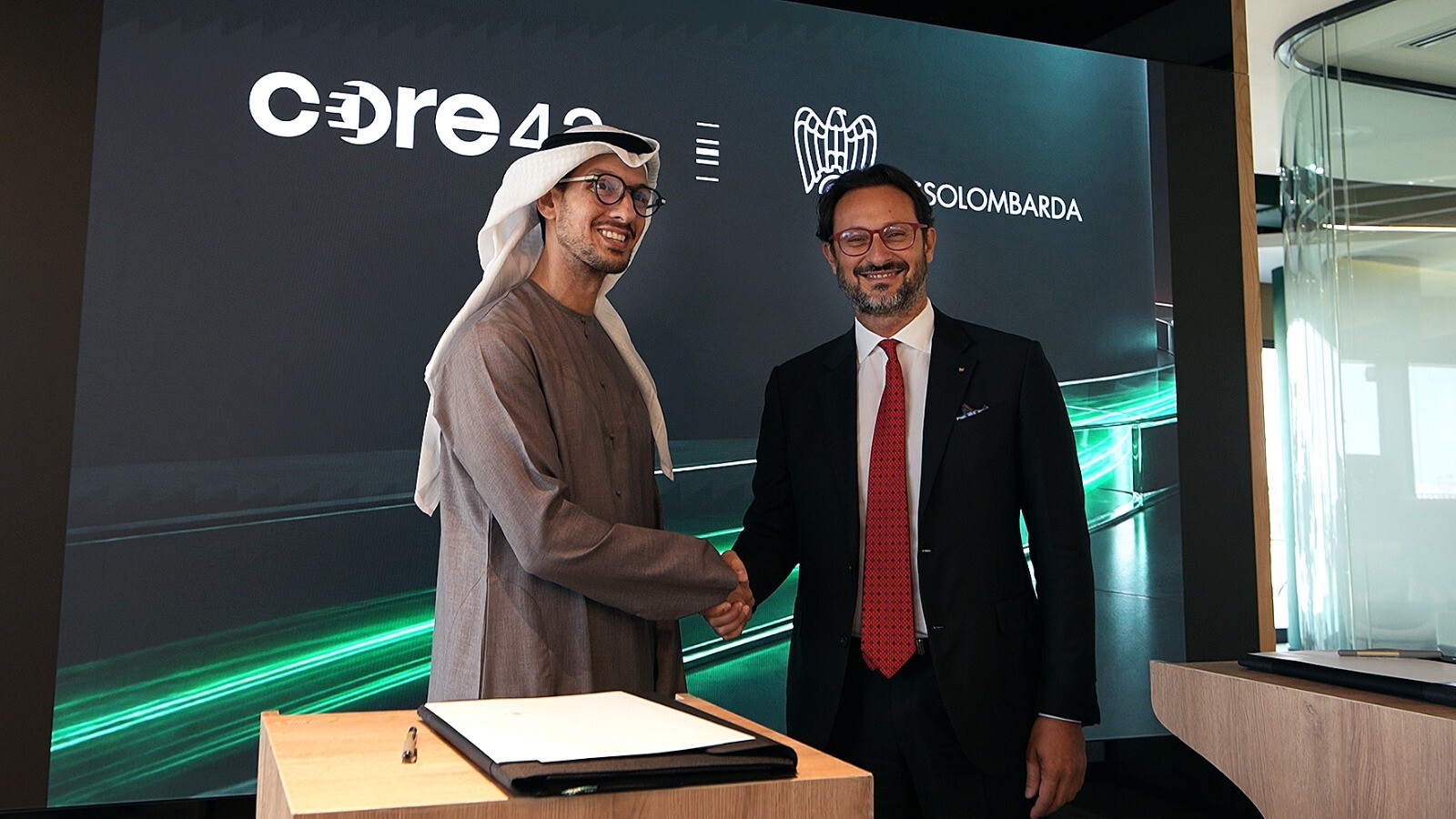
Injazat’s evolution into Core42 places its former cloud activities within G42’s broader sovereign AI and infrastructure strategy. Across three October 2026 announcements, Core42 presents a consistent operating model: Microsoft Azure services deployed in the UAE, supplemented by Core42 controls for data residency, governance, compliance monitoring and security. Core42 says this environment supports more than 47 Abu Dhabi government entities. It also announced a partner program with more than 50 initial participants, offering separate tracks for technology companies and channel partners. One early application is Toku’s AI-powered customer-experience platform, which is being onboarded in the UAE for public-sector and regulated customers. Separately, an agreement with Assolombarda proposes knowledge sharing around sovereign-enabled AI, industrial data governance and cybersecurity, connecting Lombardy’s industrial network with Abu Dhabi’s technology ecosystem. These figures, capabilities and intended outcomes come from provider and partner announcements and have not been independently verified by CloudInsights.
The emerging trend is controlled ecosystem expansion
The announcements suggest that Core42’s priority is no longer simply to provide locally hosted cloud capacity. Its direction is toward an ecosystem in which external applications can use hyperscale technology while Core42 supplies a UAE-specific governance and sovereignty layer. Toku illustrates the application pathway: an international software provider brings an existing AI service into an in-country environment, with Arabic-language and regional capabilities developed through local partnerships. The partner program attempts to make that pathway repeatable through architecture support, compliance documentation, sandbox access and joint routes to market. The Assolombarda initiative adds an outward-facing dimension: Abu Dhabi is positioned not only as a consumer of technology, but as a source of sovereign AI operating experience for industrial ecosystems abroad. For the Middle East, this points to a cloud market increasingly organised around jurisdictional control, regulated workloads and ecosystem access rather than infrastructure alone.
Sovereignty claims still require workload-level scrutiny
The material does not provide independent technical validation, service-level data, pricing, customer outcomes or detailed comparisons with alternative sovereign-cloud approaches. The Assolombarda arrangement is a memorandum focused on exploration and knowledge sharing, not evidence of completed industrial deployments. Toku’s onboarding indicates practical momentum, but the announcement does not establish production scale or measured results in the UAE. Core42 itself notes that suitability depends on workload classification, customer requirements and the applicable regulatory framework, while customers and partners remain responsible for required approvals. Decision-makers should therefore examine which operational roles remain with Microsoft, Core42 and the application provider; where metadata, support access and backups reside; how encryption keys and privileged access are controlled; and whether portability, incident response and exit arrangements meet their sector’s requirements. “Sovereign enabled” should be assessed as a specific control model, not treated as a universal compliance outcome.
Decision guide based on the Core42 partner-program announcement
For Middle Eastern IT leaders, Core42 now merits evaluation as a regional control and ecosystem layer around hyperscale cloud, particularly for UAE government and regulated workloads. Its model could reduce the work required for international software vendors to adapt products to local residency and governance expectations, but buyers should validate every relevant control contractually and technically. The strongest near-term signal is the combination of an ecosystem mechanism and a named application deployment, described respectively in the partner-program launch and the Toku deployment announcement. The Assolombarda memorandum also shows an ambition to export UAE experience and connect Abu Dhabi with European industry, although delivery remains prospective. A sensible procurement approach is to pilot a clearly classified workload, test governance and operational boundaries, and require evidence of compliance, resilience and portability before broader adoption.
