From distributed training to idle-cost reduction and urgent patching
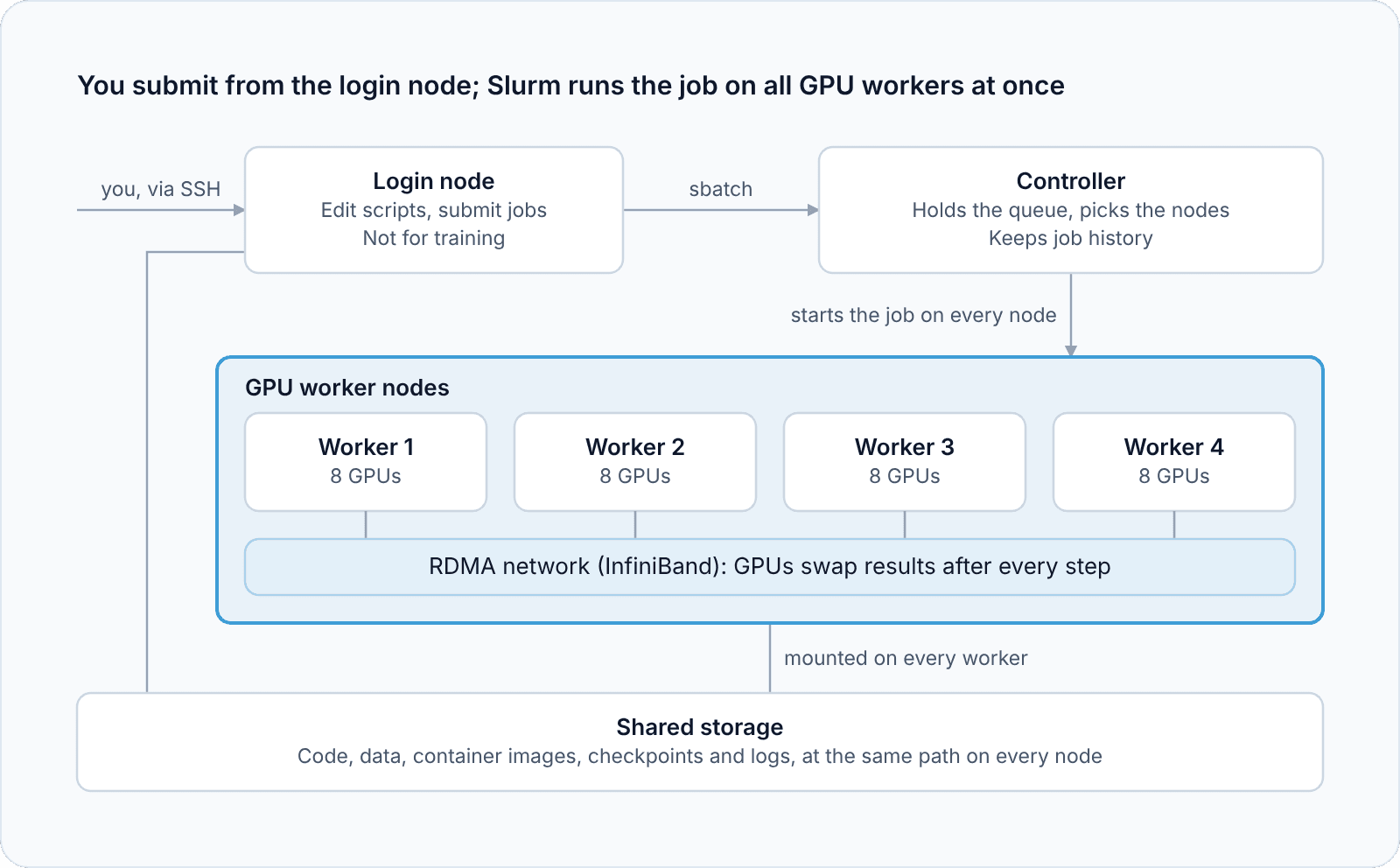
Three October 2026 articles describe E2E Networks’ priorities across AI infrastructure and cloud operations. For large-model training, the provider presents its TIR Training Cluster as a managed Slurm environment with GPU workers, RDMA-connected infrastructure, shared storage, container support, monitoring and health checks. It stresses that reliable multi-node training still requires customers to test NCCL networking, save checkpoints and prepare for node failures. For development and test inference, E2E says TIR Model Endpoints can scale to zero GPU workers, retain model weights on a Shared File System and queue requests asynchronously during cold starts. The article claims that no GPU charge applies at zero workers, although running workers, idle-timeout periods and storage remain billable; it illustrates the argument with an India-focused L40S example priced in rupees. Separately, E2E’s security team urges immediate remediation of two reported critical PHP vulnerabilities, covering virtual machines, containers, control panels and other web-serving environments. These descriptions and pricing statements come from E2E Networks and have not been independently validated by CloudInsights.
The emerging strategy: make scarce GPU capacity behave like a managed cloud resource
Taken together, the articles point to a strategy broader than simply renting GPUs. E2E is positioning TIR around the operating lifecycle of AI workloads: Slurm coordinates synchronized training jobs; shared file systems persist datasets, model weights and checkpoints; containers standardize software across nodes; serverless controls reduce idle inference capacity; and object storage supports asynchronous results. Running Slurm over Kubernetes through SchedMD’s Slinky project also suggests an attempt to combine an HPC-oriented user interface with cloud-native infrastructure underneath. The recurring concern is utilization: training needs many GPUs simultaneously and intermittently, while development inference needs capacity only when requests arrive. For Indian teams sensitive to hourly GPU expenditure, this direction is relevant because it treats scheduling, storage and automatic shutdown as economic controls as well as technical features. The PHP advisory adds another dimension: E2E wants operational security, patching and runtime hygiene to sit alongside AI services rather than presenting AI infrastructure as an isolated product category.
Automation does not remove customer responsibility or deployment trade-offs
The proposed architecture has important limitations. Scaling to zero introduces cold-start latency, while shared storage and asynchronous invocation add separate costs, dependencies and application changes. E2E provides a worked cost scenario but no independently measured cold-start results, workload-wide savings data or comparison with alternative Indian and global clouds, so buyers should model their own request patterns and verify billed GPU hours. Multi-node training likewise remains sensitive to network configuration, storage throughput, queue availability and failing hardware. E2E explicitly says that a failed node can terminate the affected job and that checkpointing remains the customer’s responsibility. The Slurm article explains operational practices but does not establish performance or availability across different cluster sizes. On security, customers managing PHP, operating systems, containers or applications must inventory, patch, restart and validate those environments themselves; a WAF is described only as an additional defence. The vulnerability details and remediation versions are provider-reported summaries of external advisories, not findings independently tested here.
India decision guide and sources: Slurm training, scale-to-zero inference and PHP security guidance
For IT decision-makers in India, the strongest signal is E2E Networks’ effort to package GPU infrastructure around practical operating problems: coordinating distributed training, avoiding idle development capacity, preserving models and checkpoints, and responding to security incidents. A suitable evaluation should therefore test the complete workflow rather than compare GPU specifications alone. Buyers should run representative NCCL and storage tests, measure queue and cold-start behaviour, confirm how GPU, idle-timeout and storage charges appear on invoices, rehearse checkpoint recovery and establish patch ownership across provider and customer teams. Production services with strict latency requirements may need permanently warm workers, whereas intermittent development, evaluation and staging workloads are more plausible candidates for scale to zero. The underlying provider material is available in E2E’s multi-node LLM training guide, development inference cost guide and critical PHP vulnerability advisory. Collectively, they support viewing E2E as pursuing an operations-led AI cloud strategy, but procurement decisions should remain conditional on workload-specific technical and commercial validation.
