From sovereign infrastructure to deployable services
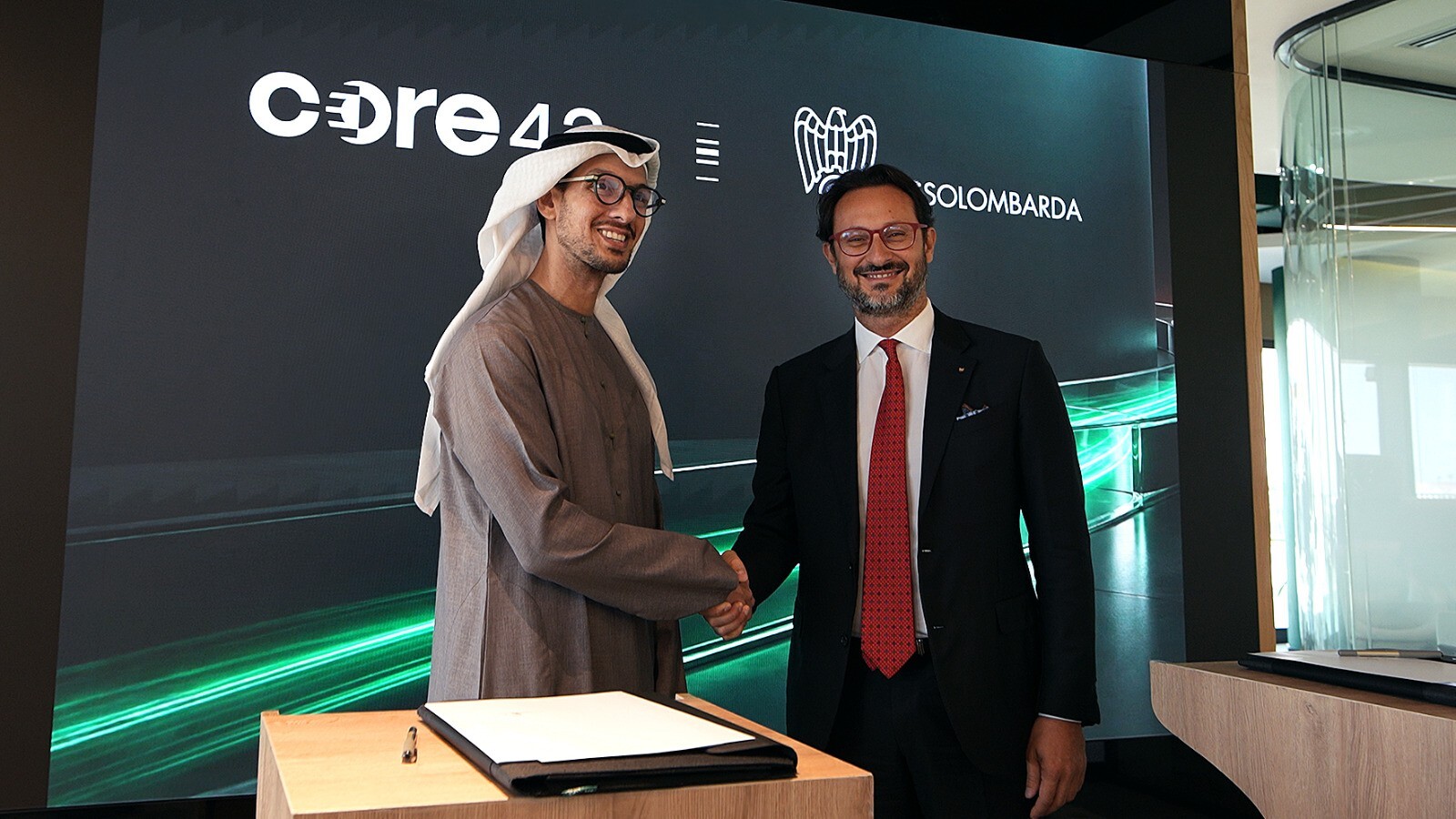
Three October 2026 announcements present Core42—the G42 company into which the former G42 Cloud proposition has evolved—as an orchestrator of sovereign-enabled cloud and AI adoption. Core42 says its public-cloud environment combines Microsoft Azure services deployed in the UAE with its own data-residency, governance, monitoring and security controls, centrally overseen through Core42 Insight. The provider reports that this environment supports more than 47 Abu Dhabi government entities. Its new partner program, launched with more than 50 partners according to Core42, is intended to bring software vendors, startups, resellers and technology partners onto that foundation. One concrete example is Toku, which says it has begun onboarding its AI-powered customer-experience platform in the UAE to address in-country data and jurisdiction requirements for public-sector and regulated customers. A separate memorandum with Assolombarda proposes knowledge sharing, workshops and links between Lombardy’s industrial ecosystem and Abu Dhabi, with an emphasis on governed industrial data sharing and sovereign-enabled AI.
Sovereignty is becoming an ecosystem strategy
The recurring theme is not cloud sovereignty as an isolated infrastructure feature, but as the organizing principle for an application ecosystem. Core42 appears to be positioning itself between a global hyperscaler and organizations that require local control: Microsoft supplies Azure technology, while Core42 adds UAE-oriented controls, governance architecture, compliance support and local operating oversight. The partner program could extend that model from infrastructure into a broader selection of applications, while the Toku deployment illustrates how an overseas software provider can localize an existing service for UAE requirements. The Assolombarda agreement points in the opposite geographic direction, using experience claimed from the UAE to cultivate relationships with European industrial organizations. Taken together, the announcements suggest that Core42’s strategic priority is to make Abu Dhabi a production base and reference point for governed AI, then connect that foundation to international technology and industrial partners. For the Middle East, the immediate relevance remains strongest in the UAE, particularly in government and regulated sectors.
Control claims require workload-level verification
These announcements are provider and partner statements, and they do not establish independently measured performance, availability, security outcomes or customer adoption beyond the figures Core42 reports. The Assolombarda arrangement is a memorandum focused on exploration and knowledge sharing rather than a production deployment. Toku’s onboarding offers a more tangible use case, but the supplied announcement provides no completed migration date, service-level results, customer list or evidence of operational outcomes in the UAE. Core42 also explicitly notes that solution suitability depends on workload classification, customer requirements and the applicable regulatory framework, while partners and customers remain responsible for necessary sector approvals. Buyers should therefore distinguish in-country hosting from complete sovereignty: identity administration, encryption-key control, support access, telemetry, software dependencies, incident handling and cross-border operational processes all require examination. Dependence on Azure also means customers should assess portability and concentration risk rather than assuming that a sovereign control layer eliminates hyperscaler dependency.
Decision guidance and sources: Assolombarda collaboration, Toku deployment and Core42 Partner Program
For Middle Eastern IT decision-makers, Core42 merits attention where UAE data residency, government alignment and access to Azure services under additional local controls are central requirements. The strongest signal is the combination of a stated government footprint, a formal partner route to market and an identifiable application onboarding—not any one announcement by itself. Procurement teams should test the model against specific workloads and demand contractual detail on data location, privileged access, control ownership, audit evidence, exit procedures and responsibility for regulatory approval. They should also ask which partner solutions are already production-ready rather than merely eligible for the ecosystem. Regional organizations outside the UAE should not infer equivalent regulatory fit or infrastructure availability in their own jurisdictions without further evidence. The underlying provider claims and proposed initiatives can be reviewed in Core42’s announcements on the sovereign-AI collaboration with Assolombarda, Toku’s planned UAE hosting arrangement and the launch of the UAE partner program.
